








How to Pick a Clean Meal Replacement (Without Getting Tricked by Labels) 💡
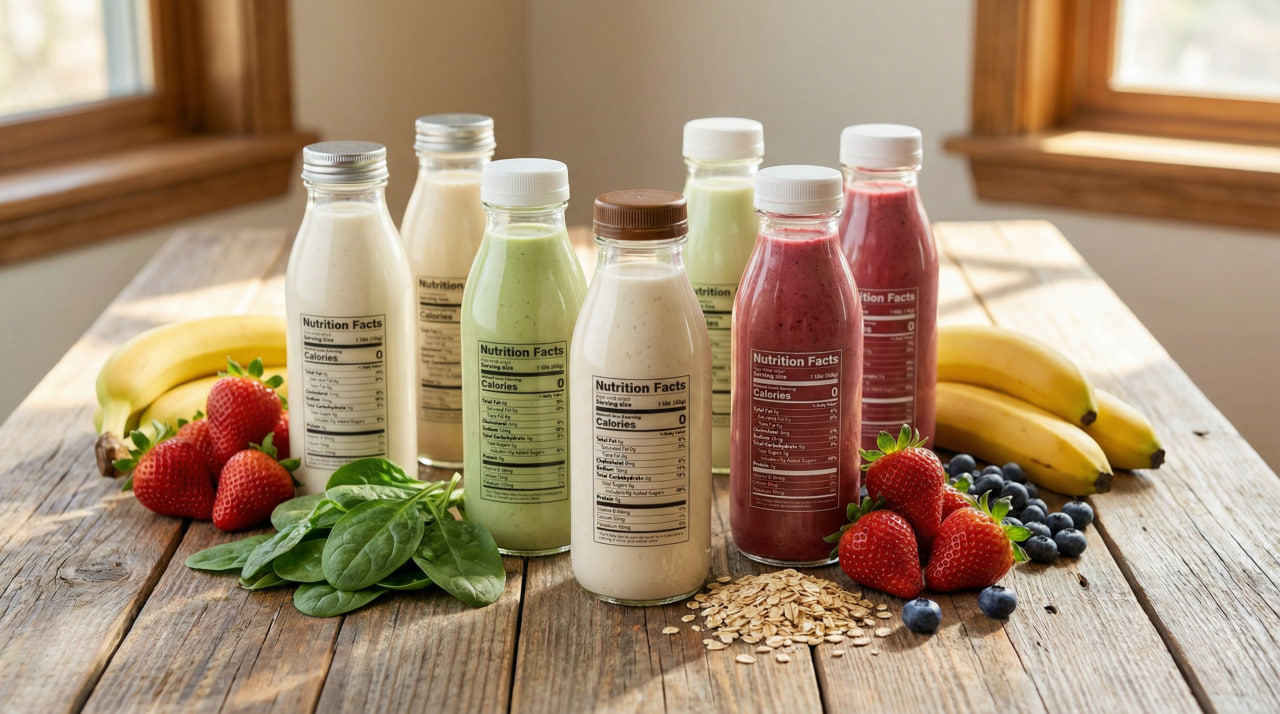
A selection of clean, high-quality meal replacement shakes ready for your healthy routine
If you want a clean, healthy meal replacement that keeps you full and supports your goals, the label matters far more than the marketing. Here’s exactly how to choose one that fuels your body instead of fooling you.
What “Clean” Really Means in a Meal Replacement ✅
A clean meal replacement supports your metabolism, digestion, and blood sugar — without artificial fillers or nutritional shortcuts.
After reviewing hundreds of products and real-world results, these are the factors that consistently predict whether a shake actually behaves like a balanced meal.
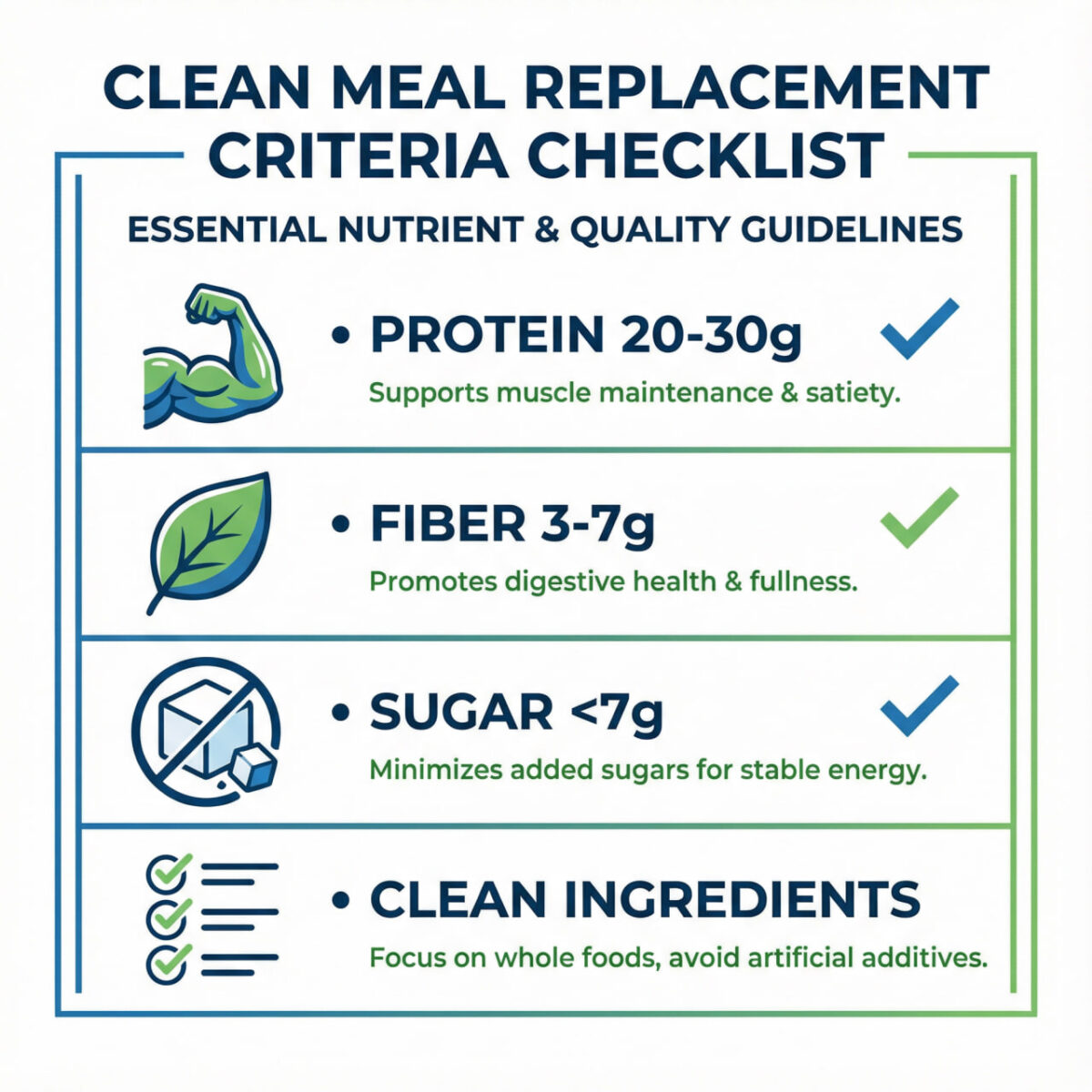
Essential checklist for choosing a truly clean meal replacement
1. It Has Balanced Macros (the Right Ratios) 📊
A real meal replacement needs all three macronutrients in proportions that mimic a whole-food meal:
- Protein: 20–30g Helps with fullness and muscle retention. Studies show diets higher in protein increase satiety and preserve lean mass during calorie restriction Protein, weight management, and satiety – ScienceDirect.
- Fiber: 3–7g Supports digestion and reduces hunger by slowing gastric emptying, as noted in research on dietary fibers and appetite regulation The role of dietary fibers in regulating appetite – PubMed.
- Healthy fats: 7–15g Fats extend satiety and stabilize energy release, ideally from sources like MCT oil or nuts.
- Carbs: Moderate and ideally from whole-food sources Aim for complex carbs from oats or fruit, not refined sugars, to avoid blood sugar spikes.
Quick rule: If a shake has <20g protein or >10g sugar, it’s usually acting more like a snack than a meal — though individual needs vary based on activity level, age, and calorie targets.
Note: In practice, switching from low-protein “diet shakes” to ones with 25g+ protein often helps users stay full for 4 hours or more. Protein is the key driver, and many budget options skimp here. 🔥
2. It Uses a Short, Transparent Ingredient List 🔍
This is where most products fall apart. A clean ingredient list should look like real food, not a chemistry exam.
Whole-food based ingredients (green lights):
- Pea, whey isolate, or brown rice protein (pea and rice are great for plant-based users, offering complete amino profiles when blended).
- Oats for sustained energy.
- Flax or chia for omega-3s and fiber.
- MCT oil (from coconut; digests quickly without spiking insulin).
- Nut butter for natural creaminess.
- Real fruit powders for flavor without added sugar.
Minimal or no (red flags): 🚨
- Artificial sweeteners (sucralose, acesulfame K) — some studies link them to gut microbiome disruption in certain individuals Effect of Non-Nutritive Sweeteners on the Gut Microbiota.
- Artificial colors.
- Gums or fillers like maltodextrin or carrageenan (the latter may cause digestive discomfort in some people, per animal and human studies Carrageenan: Inflammatory Bowel Diseases & Allergic Reactions ).
- Seed oils (soybean, canola) as primary fat sources, which can be inflammatory if overused.
Frankly, many big brands rely on gums and fillers because they’re cheap. If half the label sounds like lab equipment, skip it.
3. It Has <7g Sugar (Preferably Lower)
A clean meal replacement should not cause sharp blood sugar spikes. High-glycemic shakes can increase hunger shortly after eating, as shown in research on glycemic index and appetite High-glycemic index foods, hunger, and obesity.
Look for:
- 0–7g total sugar.
- Sweetened with stevia, monk fruit, or none at all.
- Carbs coming from whole ingredients like oats or fruit, not syrups.
Tip: If most carbs come from fiber, that’s usually a cleaner, more blood-sugar-friendly formula. 👍
4. It Actually Feels Like a Meal (Not Dust in Water) 🍽️
A meal replacement should keep you satisfied 3–4 hours. Look for:
- A naturally thicker texture from ingredients like oats or chia.
- 20g+ protein combined with fiber and fats for sustained energy.
If you’re hungry 90 minutes later, that “shake” was basically flavored water. In testing, ultra-light 150-calorie shakes often lead to rebound snacking due to insufficient macros.
5. It Contains Micronutrients — but Not a Multivitamin Dump
A solid meal replacement includes natural micronutrients from whole foods:
- Vitamins A, C, D, E from fruits and greens.
- Magnesium and potassium for energy and muscle function.
- Iron (common in plant-based blends, but check absorption with vitamin C).
But watch out for “fully loaded” formulas offering 100%+ of every vitamin. Excessive micronutrient fortification can cause nausea or headaches in sensitive individuals, as noted in health guidelines on vitamin overload 6 Tips to Avoid Nausea After Taking Vitamins. 🚨
Rule of thumb: A clean shake supports your nutrition — it doesn’t overwhelm your system. Prioritize food-derived nutrients over synthetic additions.
6. It Fits Your Diet Style 🎯
The cleanest formula is the one your body actually tolerates.
- If you’re plant-based → Choose pea, hemp, or brown rice protein (e.g., Orgain for smooth texture).
- If dairy is an issue → Avoid whey concentrate; try whey isolate or plant-based blends (like OWYN, which is allergen-free).
- If weight loss is your goal → Go for higher protein + lower sugar (e.g., Huel Black Edition with 40g protein).
- If you need long-lasting energy → Choose blends with whole-food fats like almond, flax, or MCT oil (e.g., Ample Lean).
The worst reason to choose a shake? “My friend loved it.” Your digestion and goals aren’t theirs.
7. Cost & Accessibility — How to Stay Clean on a Budget 💸
You don’t need a $60 tub to eat clean. Here’s how to evaluate value without sacrificing quality:
What’s worth paying for:
- Transparent protein source (e.g., whey isolate vs. cheap concentrate).
- Whole-food carbs and fats.
- Real fiber.
- No artificial fillers.
Where you can save money:
- Skip “superfood blends” that hide tiny doses in proprietary lists.
- Avoid celebrity-endorsed formulas.
- Choose a plain flavor; fancy flavors often add gums and cost.
Budget tip: Calculate cost per serving + grams of protein per dollar. Often the “cleanest” choice is also the most efficient (e.g., Premier Protein at ~$1/serving with 30g protein).
8. The 60-Second Clean Label Test ⏱️
If you want a lightning-fast way to judge a shake:
- Protein ≥ 20g
- Sugar ≤ 7g
- Fiber ≥ 3g
- Fat 7–15g
- Ingredients you recognize
- No artificial sweeteners or questionable fillers
- Calories 250–400 (typical meal range)
If it fails more than two? It’s a snack, not a meal.
RED FLAGS vs. GREEN LIGHTS TABLE 📊
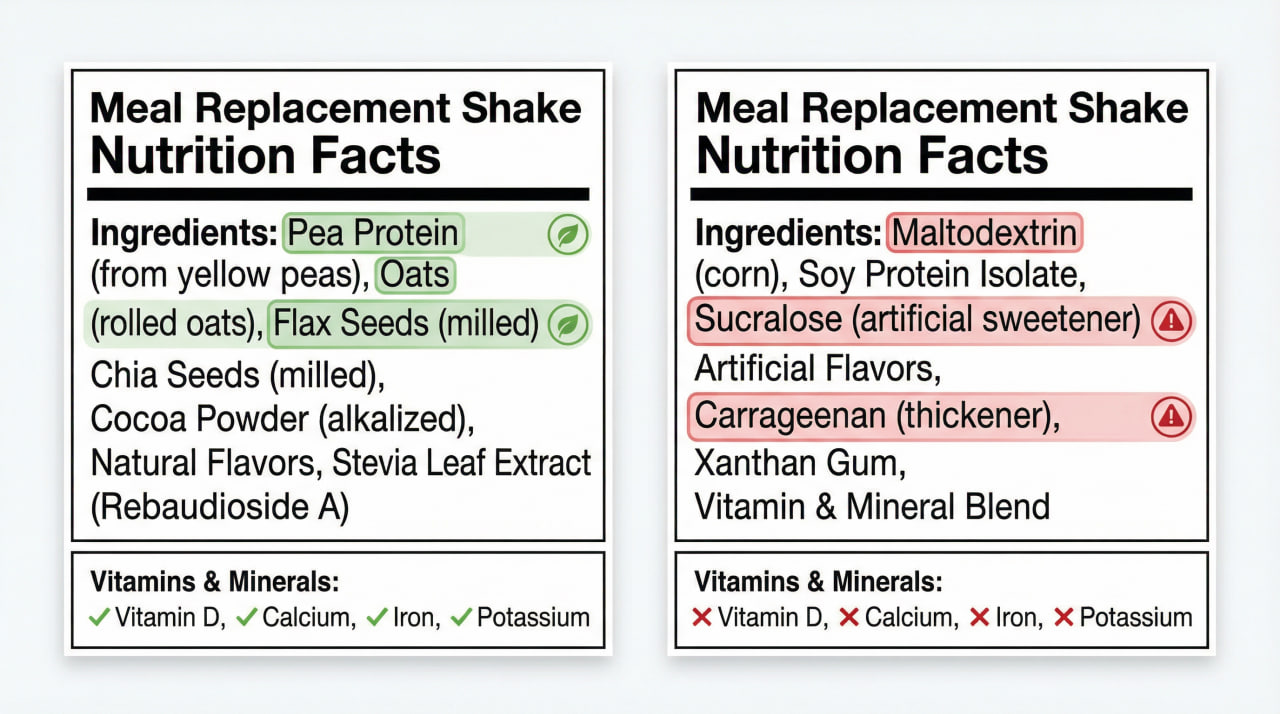
Spot the difference: clean vs. questionable ingredients on labels
| Category | Green Light (Clean) | Red Flag (Not Clean) |
|---|---|---|
| Ingredient Quality | Whole-food proteins, oats, chia, MCT oil | Maltodextrin, syrups, carrageenan, seed oils |
| Macronutrient Profile | 20–30g protein, balanced fats/carbs | <15g protein, unbalanced macros |
| Sweeteners | Stevia, monk fruit, low sugar | Sucralose, acesulfame K, >10g sugar |
| Additives | Minimal or none | Artificial flavors/colors, heavy gums, proprietary blends |
Extra Practical Tips 💡
How to decode “Proprietary Blends” If a label hides ingredients inside a proprietary blend, it usually means the beneficial ingredients appear in very small amounts. Not always shady — but often unnecessary, as it limits transparency.
Try the “Tolerance Test” Before buying a $50+ tub: → Buy one single-serving packet → Track how you feel for 3 hours → Check for bloating, hunger, or energy crashes
Your gut will tell you the truth faster than the marketing will. 👍
Questions to Ask Before You Buy
Use these to evaluate:
- Does it keep you full 3–4 hours?
- Do you recognize every ingredient?
- Is the protein source one your stomach tolerates?
- Does it match your calorie needs?
- Does the formula support your lifestyle?
FAQ — Real Questions People Ask About Clean Meal Replacements ❓
- Are meal replacements actually healthy? Yes — when they use whole-food ingredients and balanced macros. They can actually improve nutrition consistency, especially for busy people.
- Are plant-based shakes cleaner? Not automatically. Some are excellent (e.g., Orgain with organic ingredients); others are filler-heavy. Check the label, not the marketing.
- Do meal replacements help with weight loss? Absolutely. Higher-protein, lower-sugar shakes improve fullness and help maintain calorie goals, per meta-analyses Efficacy of Meal Replacement Products on Weight and Glycolipid – PMC.
- Should it be organic? Nice bonus (e.g., Orgain), but not essential. Ingredient quality and macro balance matter more.
- How many can I drink daily? Most people thrive on 1–2 per day, plus whole-food meals for fiber diversity and micronutrients.
- Are protein shakes the same as meal replacements? No. Most protein shakes lack carbs, fats, and fiber — they’re snacks, not meals (e.g., compare a basic whey shake to a full meal replacement like Soylent).
- What’s the biggest red flag? Protein under 15g or sugar over 10g. ❌ Those alone predict a weak formula.
- Are meal replacements better than whole food? Whole food wins long-term. Meal replacements are tools, not permanent substitutes — best used for convenience, portion control, and consistency.
Final Takeaway: Choose the Shake That Supports Your Real Life 🔥
A clean meal replacement is more than ingredients — it’s a tool that helps you stay consistent. Pick the one that:
- Keeps you full
- Digests smoothly
- Fits your budget
- Matches your lifestyle
- Helps you hit your goals daily
You don’t need the perfect shake — just the one you’ll actually use. Once you find it, it becomes one of the simplest habits for staying healthy, energized, and in control.

Fuel your day with a clean, nutritious shake that supports your goals