




Meal Replacement Recipes That Work — Practical, Reliable, and Easy to Prep 🥤🍽️
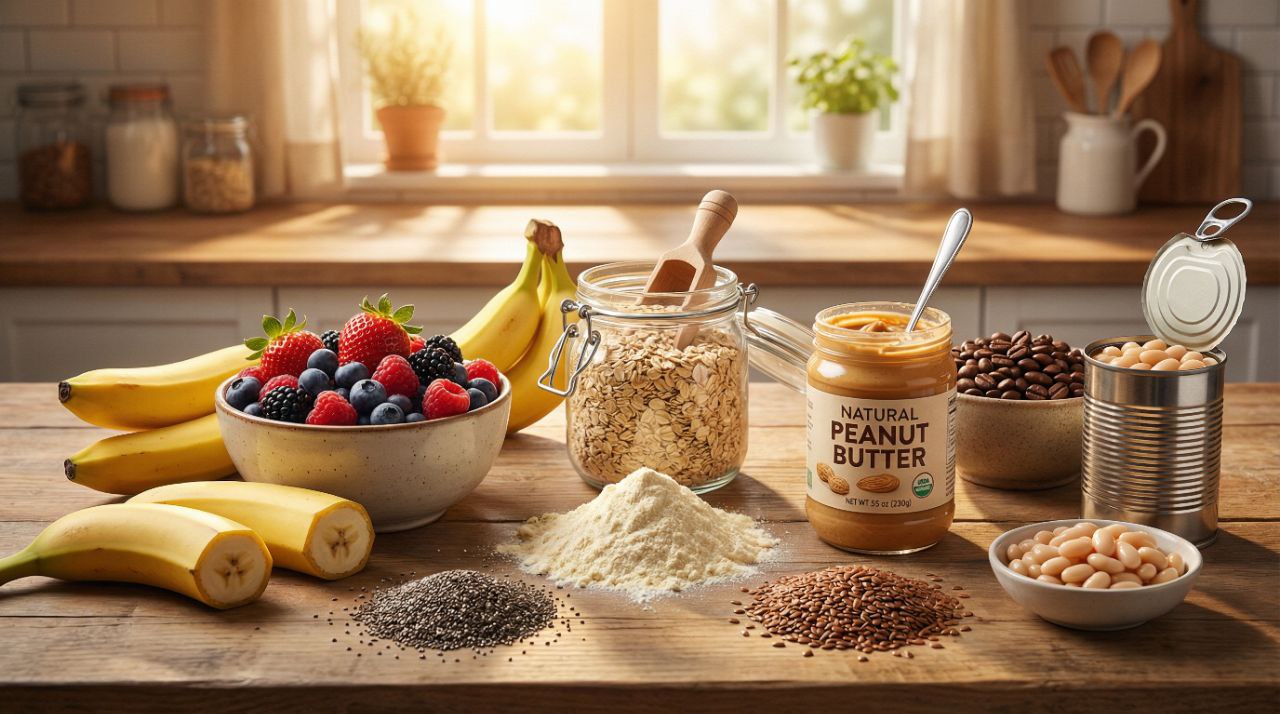
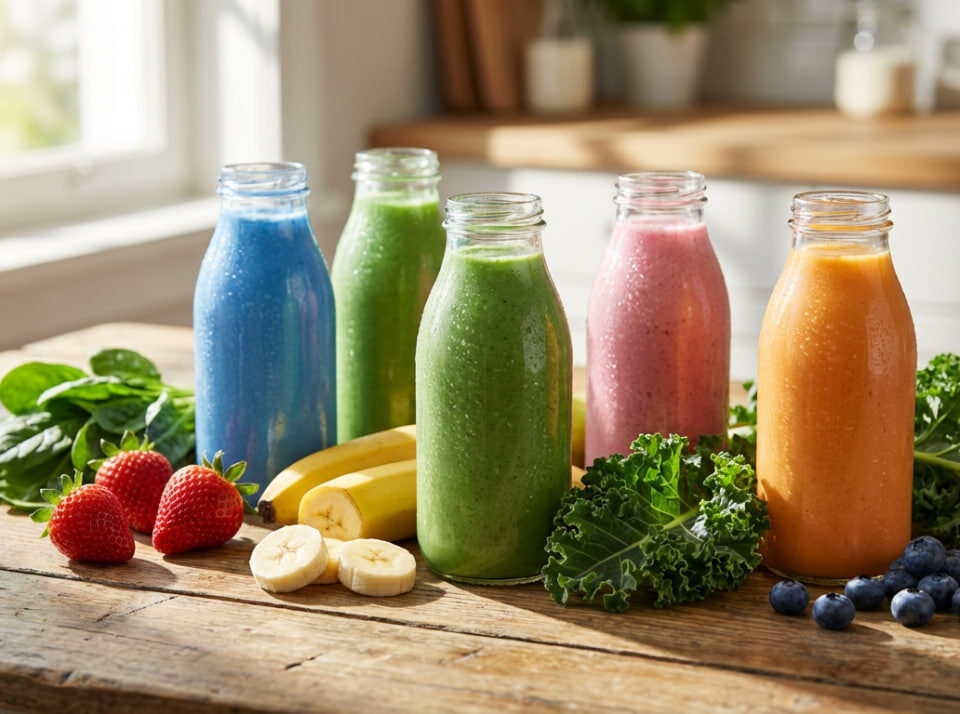
All the fresh ingredients you need for delicious, easy meal replacement shakes
Want meal replacement recipes that actually keep you full, fuel your workouts, and help you hit your goals — not leave you hungry two hours later? Below are evidence-informed, chef-tested shakes and smoothies that do the job.
Key Takeaways ✅
- Aim for 20–40 g protein per serving and at least 5 g fiber if the shake replaces a meal.
- Combine protein + fiber + healthy fat to maximize satiety and preserve muscle.
- The recipes below are flexible — swap proteins or milk types to match preferences and allergies.
- Nutrition estimates are based on USDA FoodData Central data for precision; use it for custom tracking if needed. 🔎
Why Recipes Matter (Short Science Note)
High-protein, fiber-containing meal replacements help reduce hunger, maintain muscle, and support weight or body-composition goals A controlled trial of protein enrichment of meal replacements for weight reduction with retention of lean body mass Unravelling the Effects of Soluble Dietary Fibre Supplementation on Energy Intake and Perceived Satiety in Healthy Adults. Blending whole foods (like oats, nuts, and beans) with protein powder tends to offer better micronutrient coverage and absorption due to the natural food matrix, compared to isolated formulas Whole food vs. meal replacement shakes: new study shows real foods weight loss edge .
In experience, the difference between a “filler” shake and a real meal is often 10–15 g additional protein plus a source of fat — that’s the simple trick that fixes mid-afternoon snacking. 💡
How to Use These Recipes
- Use as 1 meal/day or post-workout depending on calories and activity.
- Adjust volume: add water for thinner texture, milk (dairy or plant) for creaminess.
- Protein swaps: whey isolate, pea protein, or collagen peptides (note: collagen is low in some essential amino acids—pair with other protein).
- For exact macros: plug the recipe into USDA FoodData Central or your tracker. I recommend doing this once, saving the result, and reusing the template.
Quick Comparison Table — At a Glance 📊
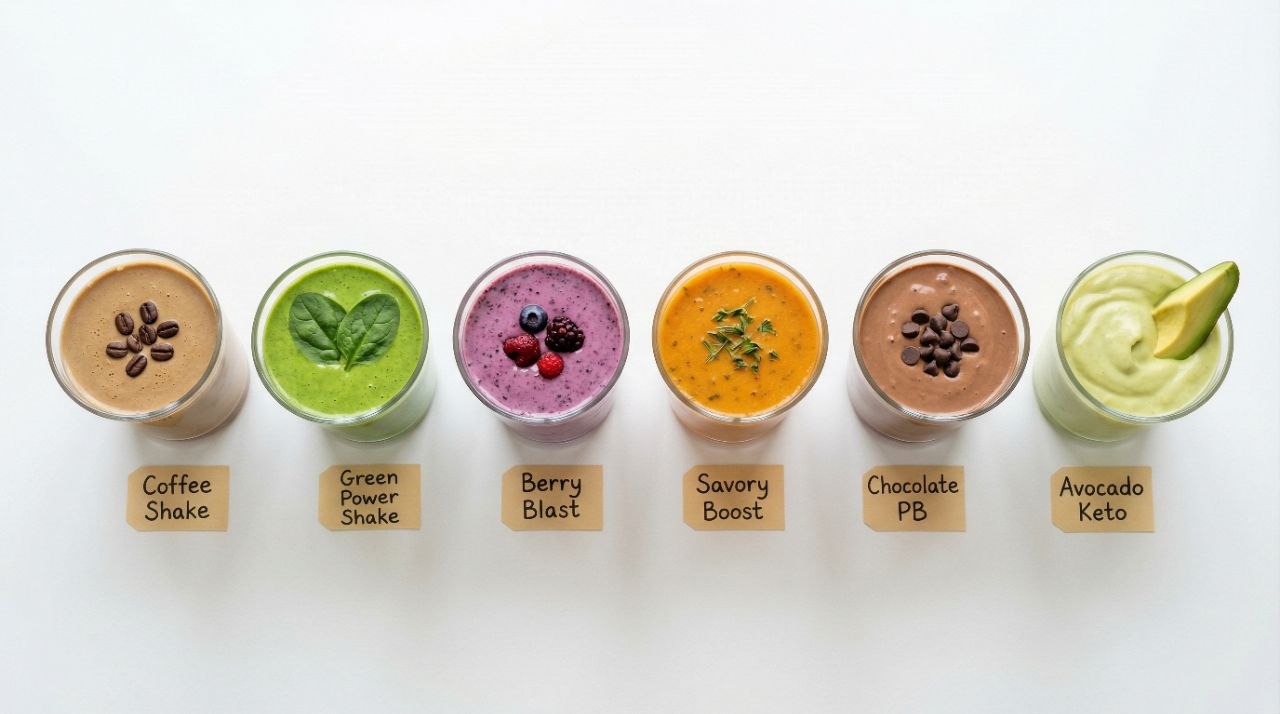
See the 6 delicious, high-protein meal replacement shakes side by side – perfect for any goal!
| Recipe | Serving Calories (est.) | Protein (g) | Fiber (g) | Best Use |
|---|---|---|---|---|
| Coffee + Whey Power Shake | ~277 kcal | 37 | 7 | Breakfast / Morning boost |
| Green Protein Smoothie | ~452 kcal | 39 | 14 | Veg-forward meal swap |
| Oat & Berry Recovery Shake | ~400 kcal | 30–35 | 7–9 | Post-workout or lunch |
| Savory Tomato & Bean Shake | ~360 kcal | 22–26 | 8–10 | Lower-sugar savory option |
| Chocolate Peanut Butter Ballshake | ~450 kcal | 35–40 | 6–8 | High-protein meal (higher cal) |
| Low-Carb Avocado Keto Shake | ~350 kcal | 28–32 | 10–12 | Low-carb / Keto-friendly |
(Estimates based on USDA data. Use USDA FoodData Central for exact values.)
Recipes That Actually Work — Ingredients, Method, Macros (est.)
Note: All servings are single-serve. Blend on high for 30–60 seconds. Macros are based on USDA FoodData Central data — ranges account for swaps (milk type, protein powder brand).
1. Coffee + Whey Power Shake ☕️ (Best for mornings)
Ingredients
- 1 cup cold brewed coffee (or cooled espresso)
- 1 scoop whey isolate (25–30 g protein)
- 1/2 cup plain Greek yogurt (nonfat or low-fat)
- 1 tbsp chia seeds
- 1/2 small banana (for body)
- 6–8 oz unsweetened almond milk
- Ice
Method: Combine, blend until smooth.
Est. macros (per USDA): ~277 kcal, 37 g protein, 7 g fiber.
Why it works: Caffeine + protein helps morning focus and appetite control. (If you’re caffeine-sensitive, use decaf.) ☑️
2. Green Protein Smoothie 🥬 (Best for nutrient density)
Ingredients
- 1 scoop pea protein (20–25 g protein)
- 1 cup fresh spinach or kale
- 1/2 avocado (adds healthy fat)
- 1 small apple or 1/2 cup frozen mango (for sweetness)
- 1 tbsp ground flaxseed
- 10–12 oz water or unsweetened soy milk
- Ice
Method: Blend until creamy.
Est. macros (per USDA): ~452 kcal, 39 g protein, 14 g fiber.
Why it works: Greens + fiber + fat promote steady blood sugar; good for midday meal replacement. ✅
3. Oat & Berry Recovery Shake (Complex carbs + protein)
Ingredients
- 1 scoop whey or plant protein (25–30 g protein)
- 1/3 cup rolled oats (dry)
- 3/4 cup mixed berries (frozen)
- 1 tbsp almond butter
- 8–10 oz milk (dairy or fortified plant milk)
- 1 tsp cinnamon
Method: Blend oats first with milk to break down, then add remaining ingredients.
Est. macros (per USDA): ~400 kcal, 30–35 g protein, 7–9 g fiber.
Why it works: Oats provide sustained carbs for recovery; berries add polyphenols. 🍓
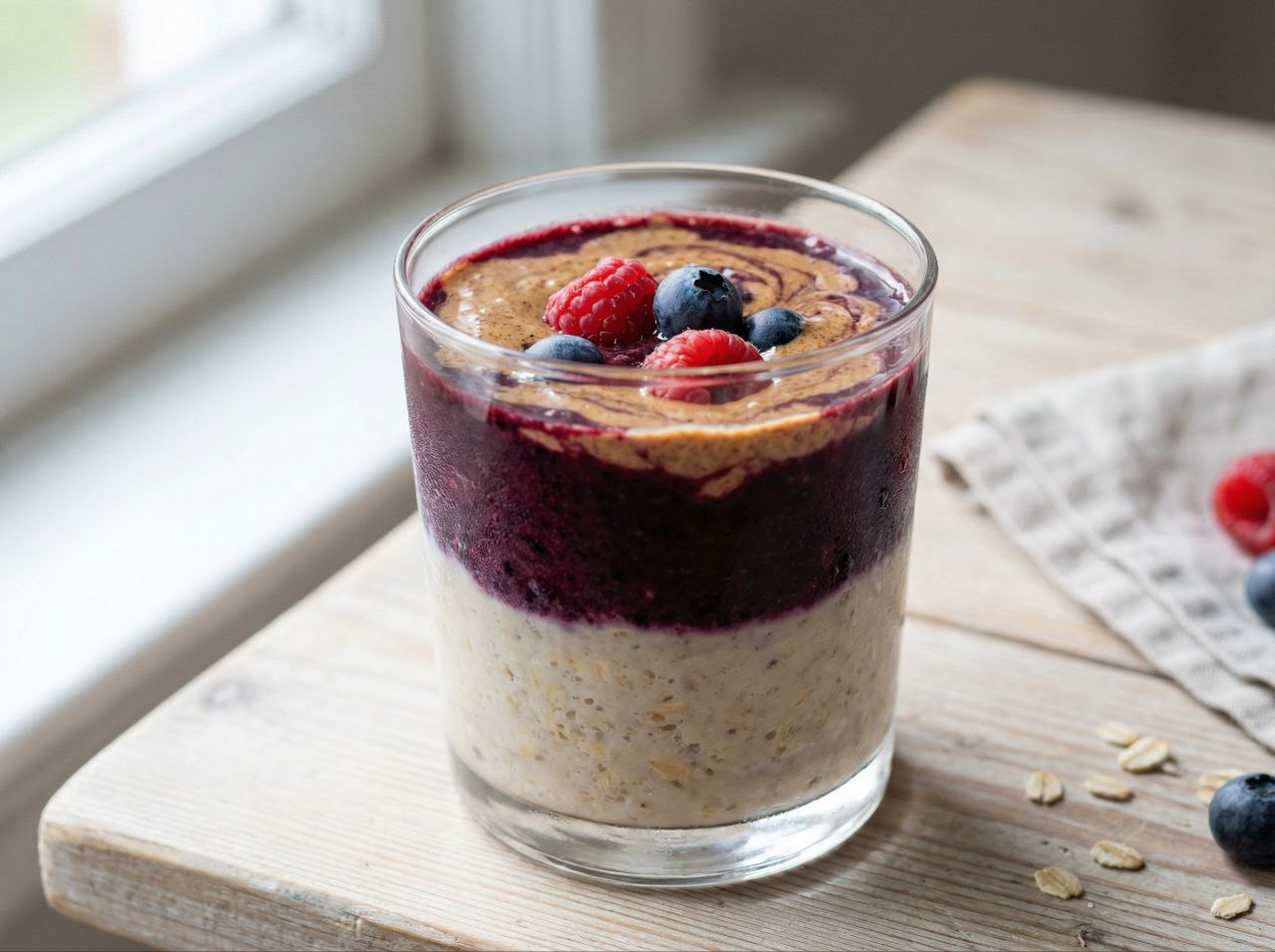
Creamy Oat & Berry Recovery Shake – ready to blend and enjoy
4. Savory Tomato & Bean Shake (When you want something different)
Ingredients
- 3/4 cup low-sodium tomato juice or V8
- 1/2 cup cooked white beans (cannellini) — adds protein & creaminess
- 1 scoop unflavored protein (whey isolate or pea)
- 1 tbsp olive oil or 1/4 avocado
- Salt, pepper, a squeeze of lemon, pinch of smoked paprika
Method: Blend until smooth. Serve chilled or room temp.
Est. macros (per USDA): ~360 kcal, 22–26 g protein, 8–10 g fiber.
Why it works: Savory variety reduces sugar load and helps those who dislike sweet shakes.
5. Chocolate Peanut Butter Ballshake (High-protein comfort)
Ingredients
- 1 scoop chocolate whey (or plant) protein (25–30 g)
- 1 tbsp natural peanut butter
- 1/3 cup silken tofu or Greek yogurt
- 1 tbsp cocoa powder
- 1/2 cup oats or 1 small date for sweetness
- 8 oz milk of choice
Method: Blend until smooth; add ice.
Est. macros (per USDA): ~450 kcal, 35–40 g protein, 6–8 g fiber.
Why it works: Balanced macros for those who need higher calories; tastes like a treat but structured. 🍫
6. Low-Carb Avocado Keto Shake (For low-carb or keto diets)
Ingredients
- 1 scoop unflavored whey isolate or collagen (25–30 g protein)
- 1/2 avocado
- 1 cup spinach
- 1 tbsp MCT oil or coconut oil
- 1/4 cup berries (low-sugar like raspberries)
- 8 oz unsweetened almond milk
- 1 tsp vanilla extract (optional)
Method: Blend until creamy; add ice for thickness.
Est. macros (per USDA): ~350 kcal, 28–32 g protein, 10–12 g fiber (net carbs ~5–8g).
Why it works: High fat, low carb for sustained energy without sugar spikes; ideal for keto users.
Meal-Prep & Scaling Tips
- Batch dry mixes: pre-portion protein + oats + spices in zip bags for travel.
- Frozen fruit packs: pre-portion berries/banana in freezer bags — drop directly into blender.
- Make a “base” jar: blend a large batch of oats + flax + protein and refrigerate up to 48 hours; add fresh fruits/milk per serving.
- Shelf-stable swaps: use powdered milk or pouch-packed purees when traveling.
Shopping List (basic, flexible) 🛒
- Whey isolate / pea protein powder
- Rolled oats
- Chia / flax seeds
- Greek yogurt or silken tofu
- Nut butter (almond/peanut)
- Frozen berries + bananas
- Unsweetened milk (almond/soy/dairy)
- Canned beans (low salt)
- Spices: cinnamon, cocoa, smoked paprika
Common Mistakes (and how to avoid them) 🚫
- Too little protein: Under 20 g often fails to curb appetite. Aim higher if active.
- Hidden sugar: Watch flavored yogurts, sweetened milks, or flavored protein powders.
- Overloading calories unintentionally: Nut butter + milk + oats stack quickly — scale portions.
- Relying solely on shakes long-term: Use whole foods in rotation for micronutrient variety.
FAQ — Real Questions People Ask ❓
Q: Can I replace two meals per day with these shakes? A: Possibly for short periods, but for long-term health you want at least one whole-food meal daily to ensure micronutrient and food-matrix benefits.
Q: Which protein type is best for shakes? A: Whey isolate is fast and high-quality; pea protein is the best plant alternative for amino-acid completeness. Combine sources if you’re plant-based.
Q: How do I keep a shake from causing bloating? A: Start with smaller portions of fiber (e.g., 1 tbsp chia), and test tolerance (see “Tolerance Test” earlier). Also, blend thoroughly.
Q: Are homemade recipes better than store RTDs? A: Homema
de recipes give you control over ingredients and additives; RTDs can be convenient but read labels for sugar and gums.
Sample 3-Day Plan (How to integrate) 🗓️
- Day 1: Breakfast: Coffee + Whey Power Shake. Lunch: salad + chicken. Dinner: fish + veg.
- Day 2 (Workout): Breakfast: oats + fruit. Post-workout: Oat & Berry Recovery Shake. Dinner: hearty grain bowl.
- Day 3: Breakfast: Green Protein Smoothie. Lunch: lean wrap. Dinner: Savory Tomato & Bean Shake (lighter evening).
Final Coaching Note — Practical & Human 🔥
Recipes are tools. The best shake is the one you’ll drink consistently and that helps you stay full, fueled, and satisfied. Try 1 recipe daily for two weeks, tweak one variable (more protein, less fruit), and note how your hunger, energy, and workouts respond. If you want, I can:
- Convert these into printer-friendly recipe cards,
- Build a 7-day shake meal plan tailored to weight loss or muscle gain, or
- Estimate precise macros using USDA data for any recipe.
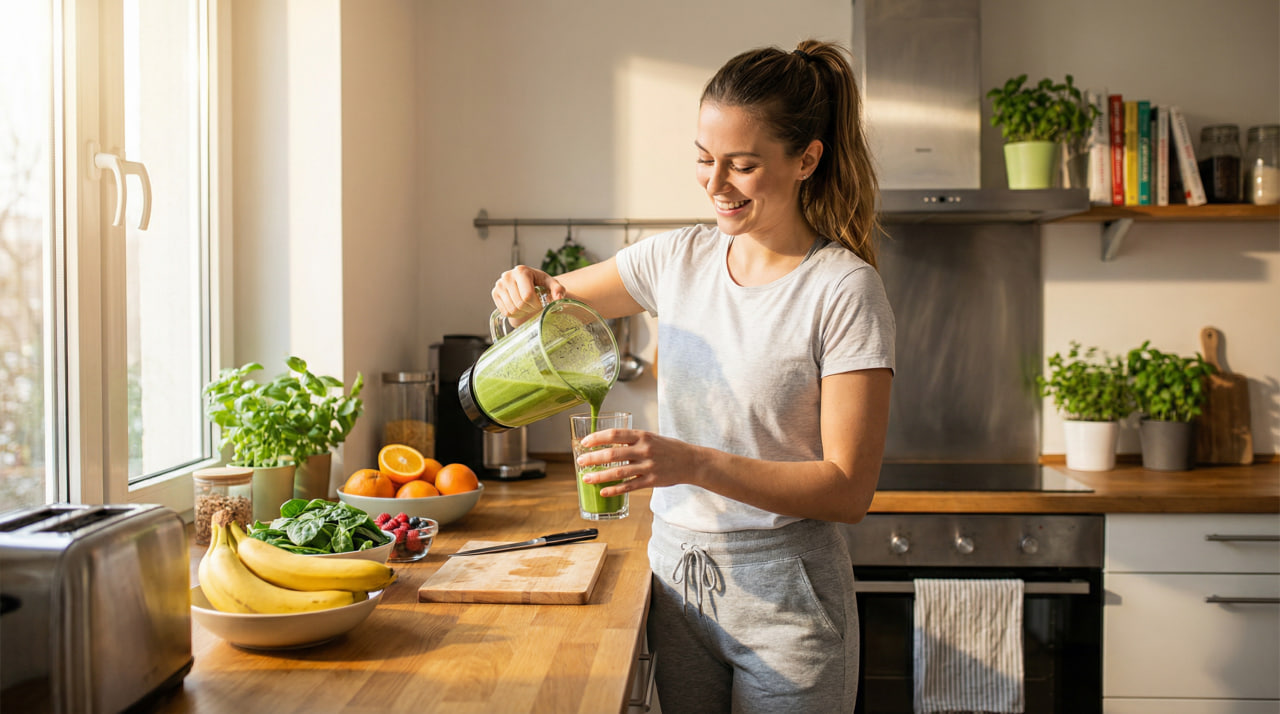
Start your day with a nutritious, homemade shake that keeps you full and energized
Drop a comment with your favorite recipe or goal (weight loss? muscle gain? busy mornings?), and I’ll help personalize it for you! 💪