






Budget-Friendly High-Protein Snacks: Smart Strategies That Actually Save Money 💡
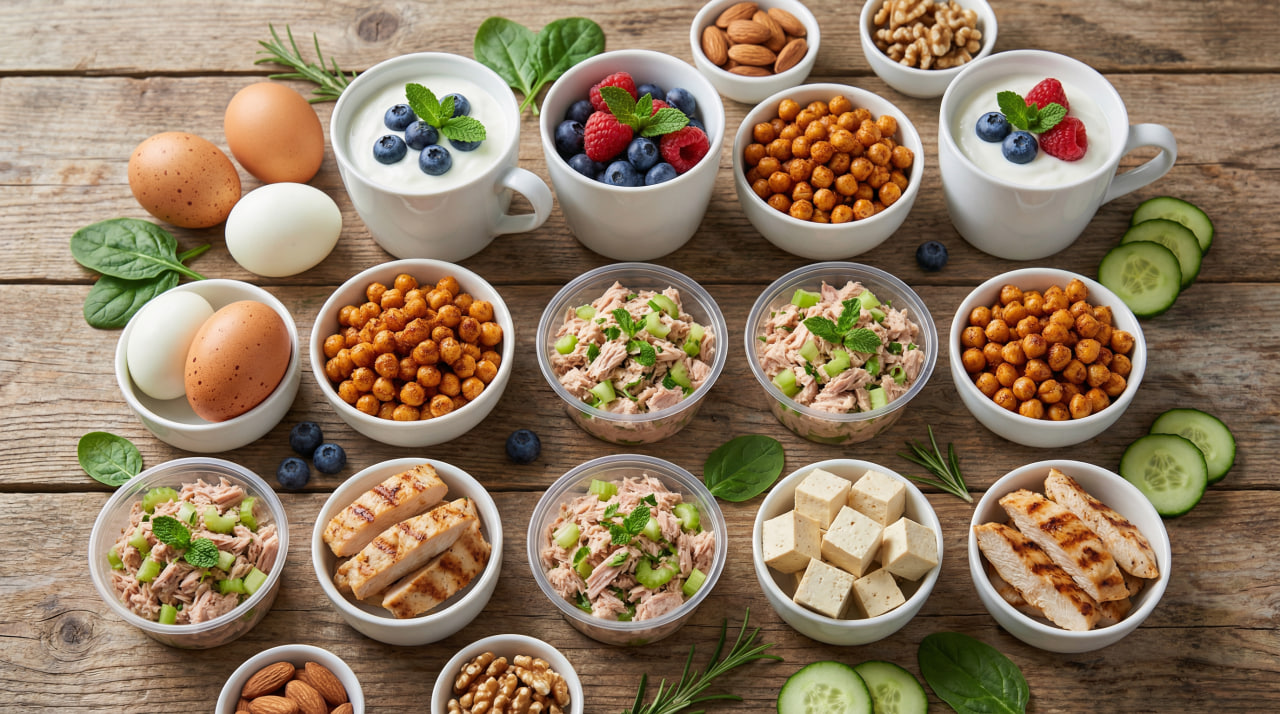
Simple, affordable high-protein snacks you can easily prepare at home – featuring eggs, yogurt, legumes, canned fish, chicken, and tofu.
Eating high-protein doesn’t have to drain your wallet. With the right strategies, you can build satisfying, protein-rich snacks that support your goals—without relying on expensive packaged products or brand names.
This guide focuses on how to eat high-protein on a budget using food categories, smart shopping habits, and evidence-based nutrition principles that actually work.
Why Protein Matters—Even on a Budget 🧠
Protein plays a key role in:
-
Improving satiety and appetite control
-
Helping stabilize blood sugar between meals
Research consistently shows that higher-protein snacks increase fullness and can reduce overall calorie intake later in the day 📊. Protein also helps stabilize blood glucose, supporting steadier energy levels—especially useful for busy schedules and long gaps between meals.
The challenge? Many people assume protein automatically means pricey bars, shakes, or specialty foods. In reality, some of the most cost-effective protein sources are also the least processed.
The Budget Rule That Changes Everything: Cost per Protein, Not Price per Item 📊
One of the biggest budgeting mistakes is judging food by sticker price alone. A smarter approach:
-
Look at protein per serving
-
Consider how many servings you actually get
-
Estimate the cost per gram of protein
Foods that look “cheap” can deliver very little protein, while simple whole foods often provide far more protein per dollar over time.
👉 This mindset shift alone can dramatically reduce food costs.
Protein Value Comparison (Approximate Averages)
The table below compares common protein-rich foods by protein content and cost efficiency. Prices vary by region and season, but these ranges provide a realistic benchmark.
| Food Item | Protein per Serving (g) | Approx. Cost per Serving (USD) | Cost per Gram of Protein |
|---|---|---|---|
| Dry lentils (½ cup cooked) | ~18 | $0.20–0.30 | $0.01–0.02 |
| Black beans (½ cup canned) | ~15 | $0.25–0.40 | $0.02–0.03 |
| Eggs (2 large) | ~12 | $0.50–0.80* | $0.04–0.07 |
| Greek yogurt (6 oz plain) | 15–20 | $0.60–0.90 | $0.03–0.06 |
| Cottage cheese (½ cup) | ~14 | $0.50–0.70 | $0.04–0.05 |
| Canned tuna (3 oz drained) | 20–25 | $0.80–1.20 | $0.03–0.06 |
| Chicken thighs (4 oz cooked) | ~25 | $0.50–0.80 | $0.02–0.03 |
| Tofu (4 oz firm) | 10–12 | $0.40–0.60 | $0.03–0.06 |
*Egg prices can fluctuate due to supply conditions—always compare locally.
Budget-Friendly High-Protein Snack Categories That Deliver ✅
Instead of chasing products, focus on food categories that consistently provide strong protein value.
🥚 Eggs & Egg-Based Snacks
-
Hard-boiled eggs
-
Egg muffins with vegetables
-
Egg salad on whole-grain toast
Eggs offer complete protein and versatility. If prices spike locally, compare with legumes or dairy for better value.
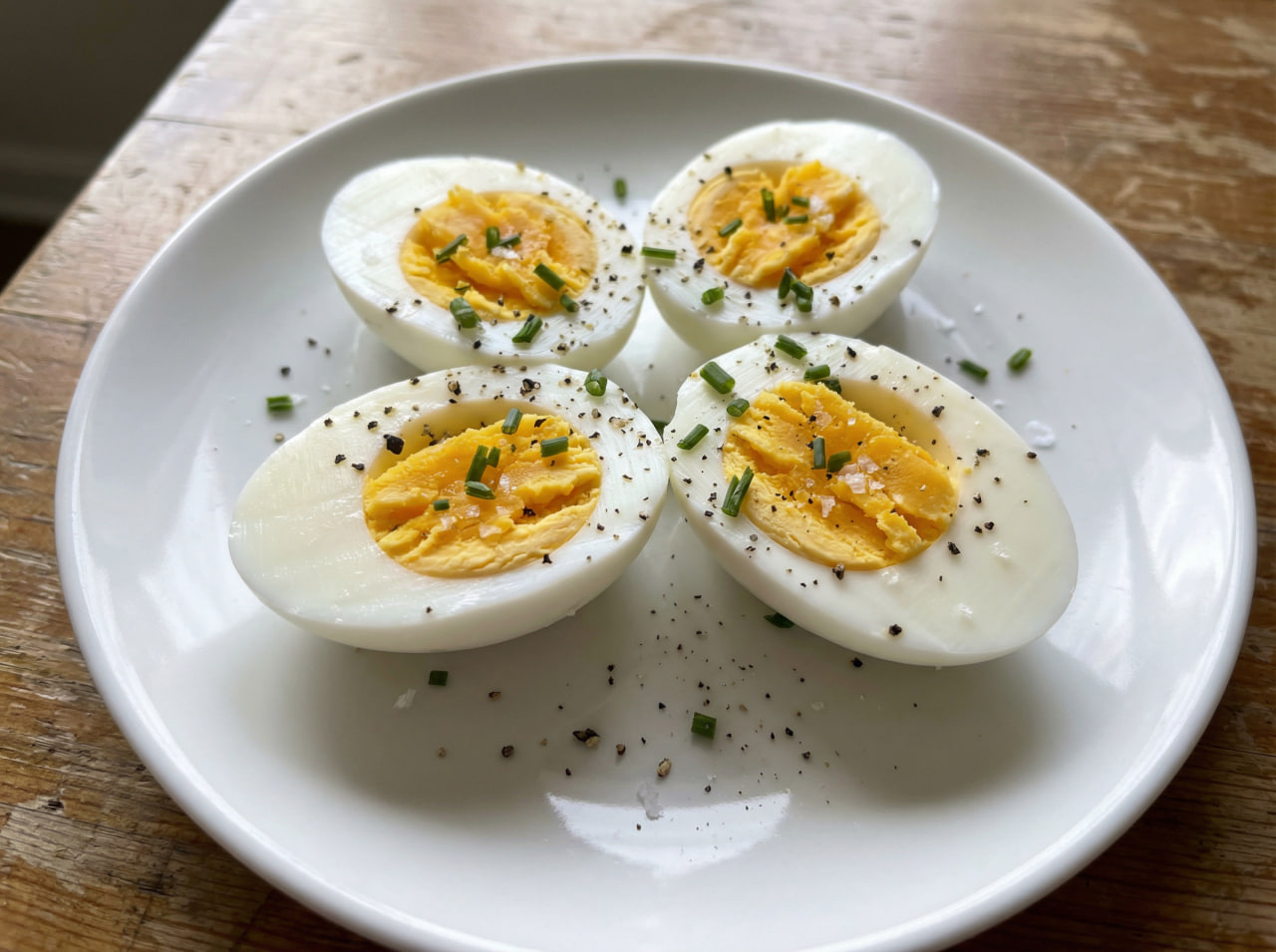
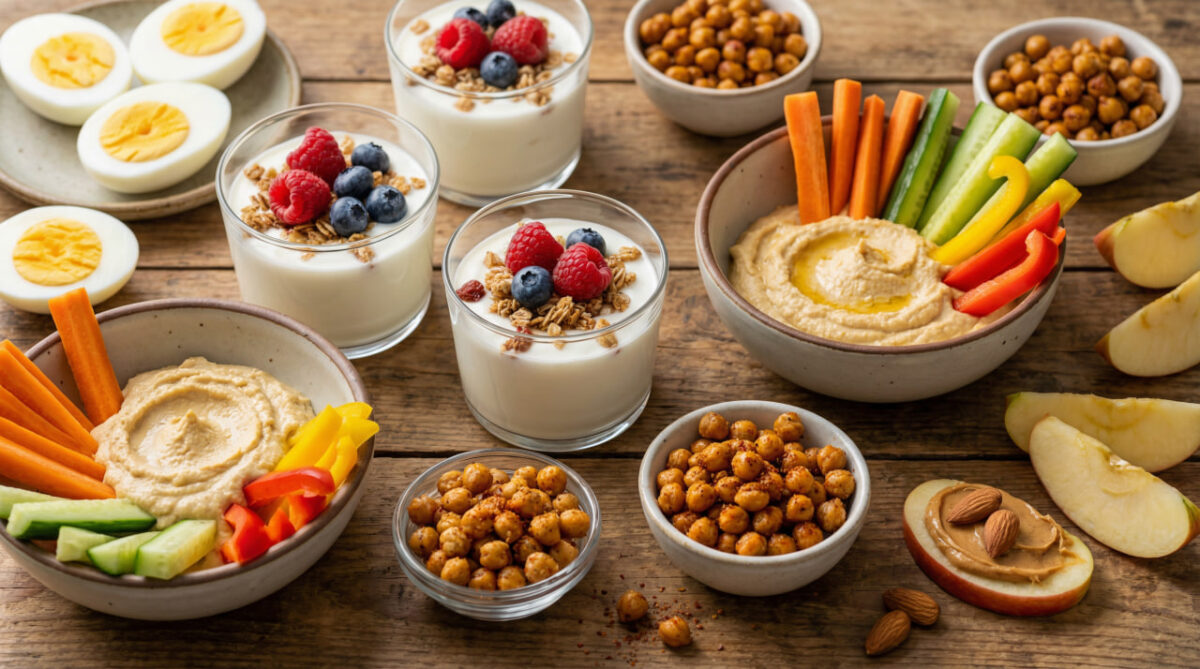
Quick and affordable high-protein snack: hard-boiled eggs sprinkled with pepper, salt, and chives for extra flavor without extra cost.
🥛 Dairy-Based Snacks
-
Plain Greek yogurt with fruit
-
Cottage cheese with savory toppings
-
Milk paired with whole grains
💡 Choosing plain versions and adding your own flavor reduces cost and added sugar.
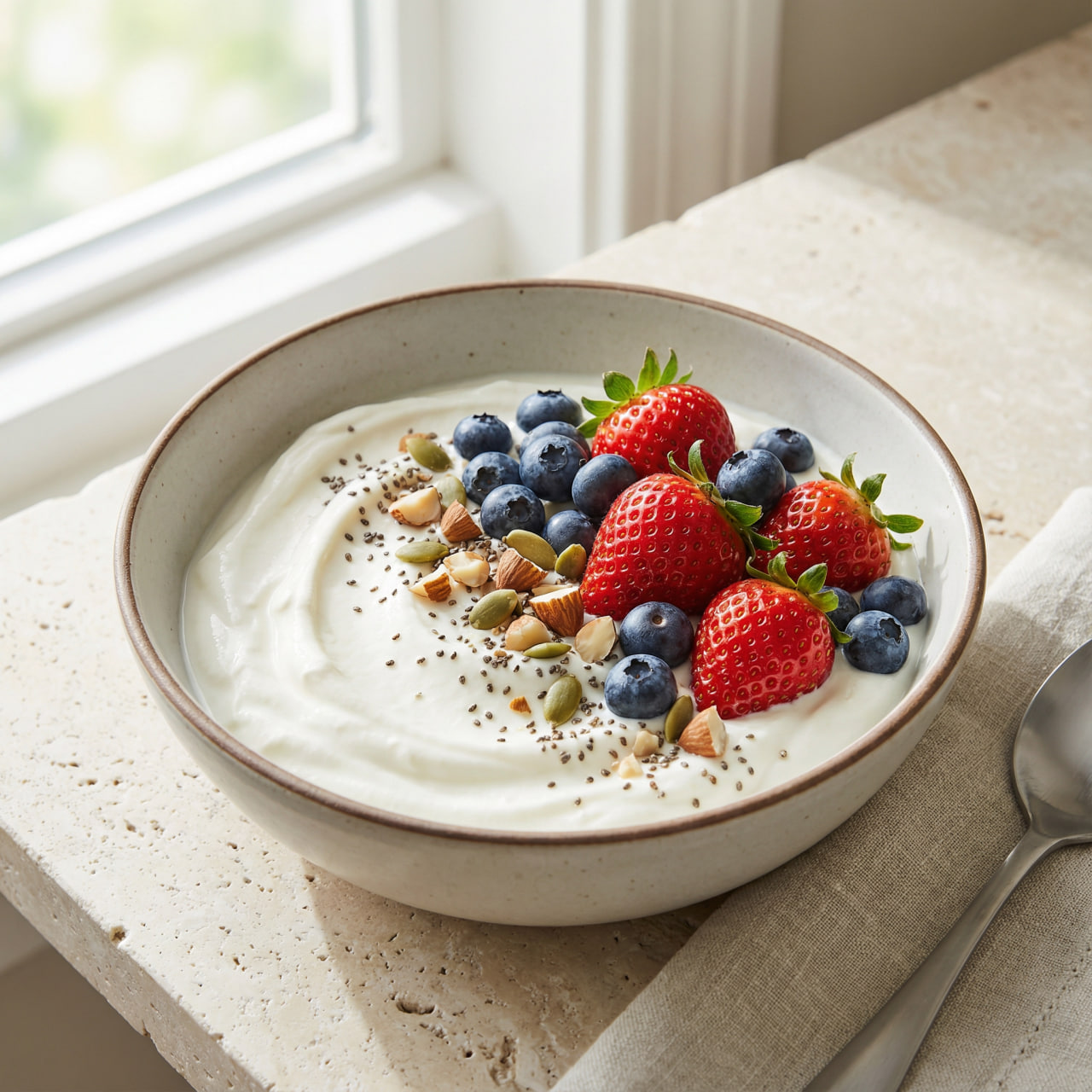
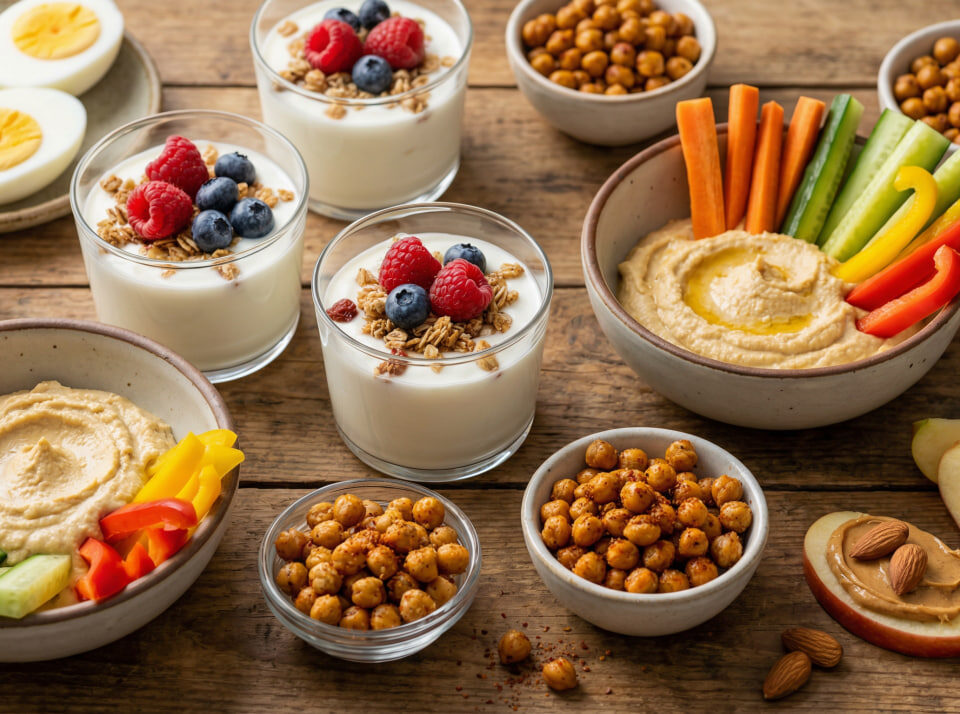
Affordable and satisfying high-protein snack: plain Greek yogurt customized with seasonal berries, nuts, and seeds for extra flavor, fiber, and crunch
🍗 Lean Meats & Poultry
-
Chicken thighs
-
Ground turkey
Buying bone-in or family packs often lowers the cost per serving.
🐟 Fish & Seafood (Canned Options)
-
Tuna salad
-
Sardines on crackers
-
Salmon pouches
Shelf-stable, protein-rich, and often cost-effective.
🌱 Legumes: The Budget Protein Powerhouse
-
Lentils, chickpeas, black beans
-
Hummus with vegetables
-
Roasted chickpeas
Legumes combine protein and fiber, improving satiety and gut health—ideal for budget-conscious and plant-based diets.
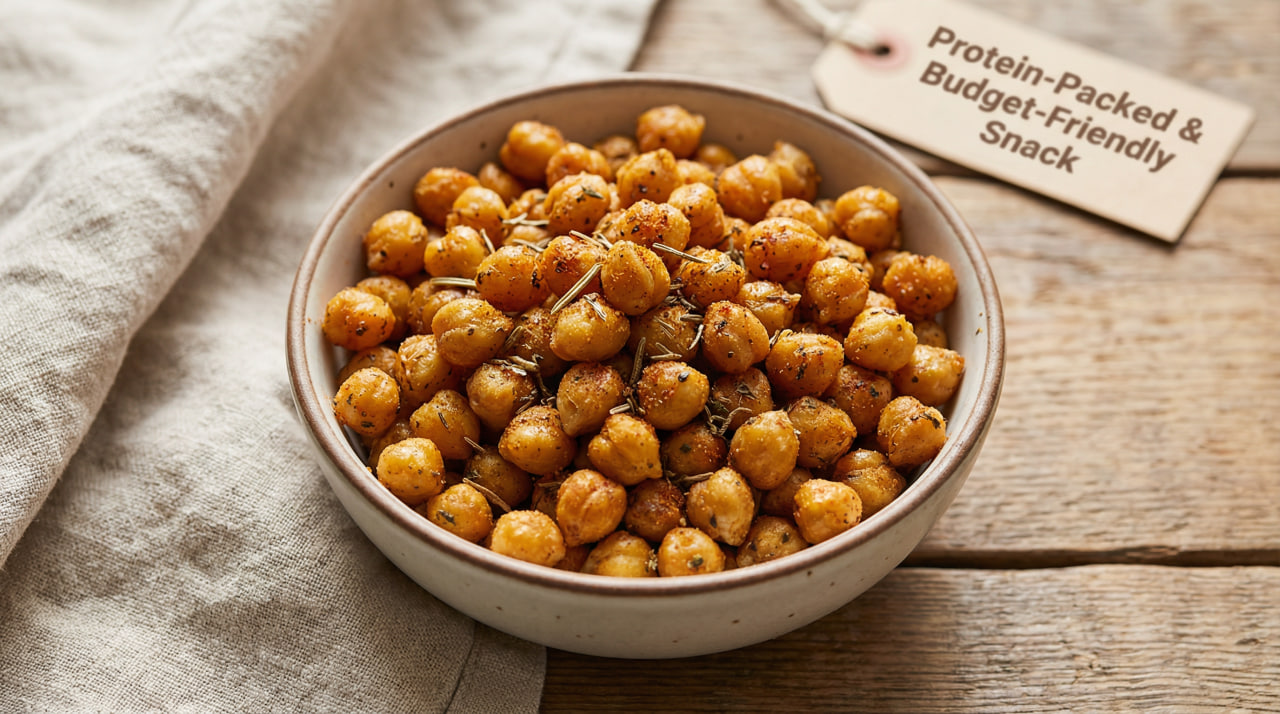
One of the most affordable high-protein snacks: homemade roasted chickpeas with simple herbs and spices for satisfying crunch on a budget.
🫘 Plant-Based Proteins Beyond Legumes
-
Tofu
-
Tempeh
-
Edamame
Affordable, versatile, and easy to batch-prep.
🌰 Nuts & Seeds (Used Strategically)
-
Nut or seed butter on fruit
-
Added to yogurt or oats
Energy-dense, so small portions go a long way.
Whole Foods vs. Processed “Budget” Snacks 🚨
Many low-cost packaged snacks appear budget-friendly but fall short nutritionally:
-
Low protein despite marketing claims
-
High refined carbs and added sugars
-
Poor satiety → more snacking later
A whole-food snack may cost slightly more upfront but often reduces total daily food spending by keeping you full longer.
Cheap food isn’t always affordable in the long run.
Smart Shopping Strategies That Actually Save Money 🛒
-
Buy in bulk when shelf life allows
-
Use frozen or canned options
-
Choose plain, unflavored products
-
Compare price per unit, not package size
-
Use store apps, loyalty programs, and weekly sales
💡 Skipping novelty flavors and “functional” marketing usually cuts costs immediately.
Simple Prep = Lower Costs 🥣
Prepared foods cost more. High-impact habits include:
-
Batch-cooking protein staples
-
Repurposing leftovers into snacks
-
Keeping a small rotation of repeatable options
Consistency beats variety when budgets are tight.
How Much Protein Should a Snack Provide? ⚖️
For most adults:
-
10–20g protein per snack works well
-
Pair protein with fiber or healthy fats
The goal is support, not perfection.
Common Budget Mistakes to Avoid ❌
-
Chasing cheap snacks with minimal protein
-
Overpaying for convenience packaging
-
Ignoring satiety and needing multiple snacks
-
Relying on specialty “protein” products instead of basics
FAQ — Budget & Protein, Answered
Is eating high-protein always more expensive?
No. Many whole-food protein sources are among the most affordable foods available.
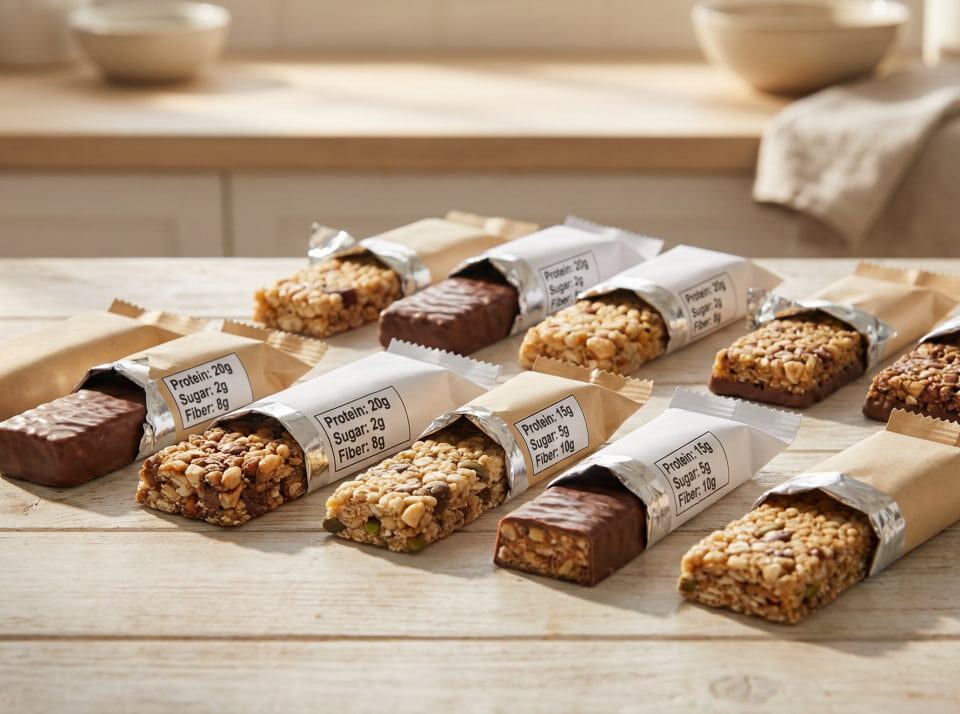
Are protein bars necessary?
Not at all. They’re optional conveniences, not essentials.
Do plant-based proteins save money?
Often yes—especially legumes and tofu used as staples.
Are frozen foods lower quality?
No. They’re often nutritionally equivalent and more affordable.
Final Takeaway: Strategy Beats Products 🔥
Budget-friendly high-protein snacking isn’t about finding the cheapest product—it’s about building smart systems.
Focus on:
-
Protein-rich food categories
-
Cost-per-protein thinking
-
Simple prep habits
-
Whole foods over hype
You don’t need brand names or perfect macros—just repeatable choices that fit real life and real budgets.
Do that consistently, and both your nutrition and your wallet will thank you 💪