




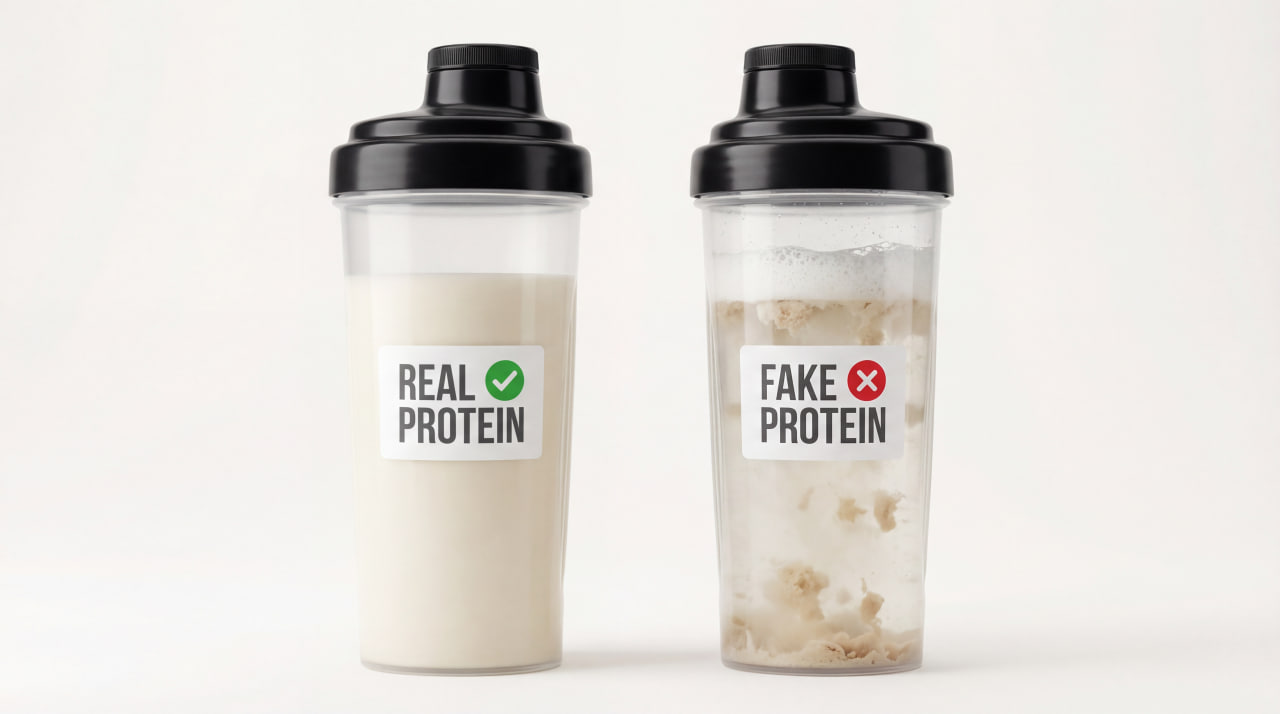
🔍 How to Avoid Fake Protein Powders
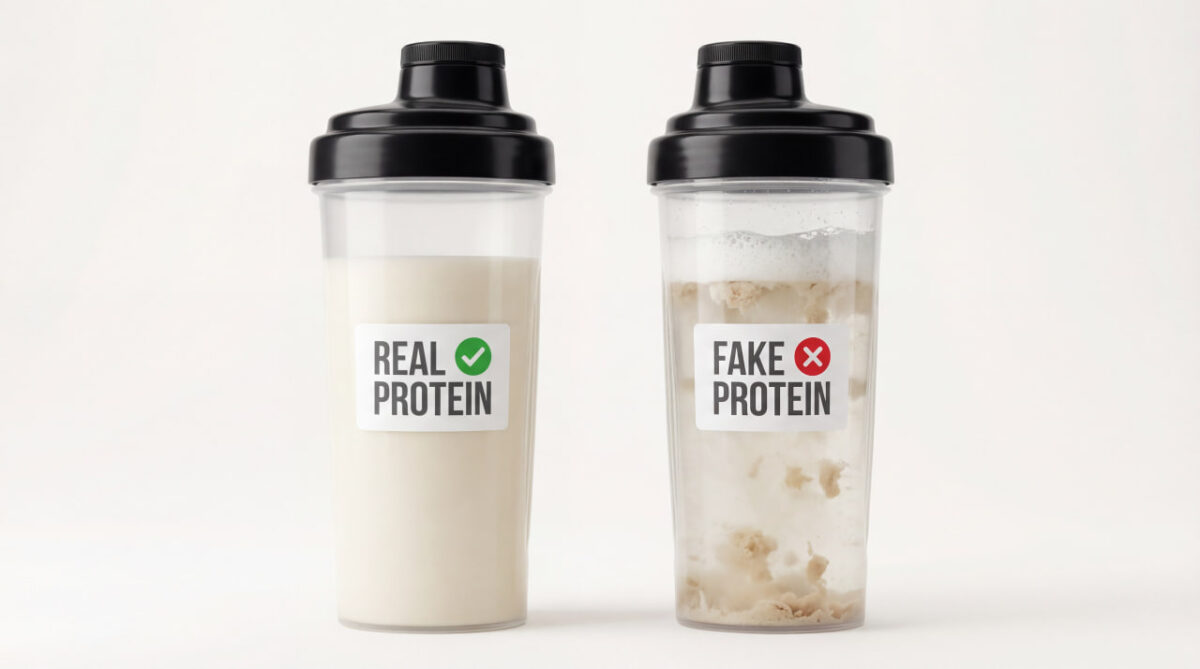
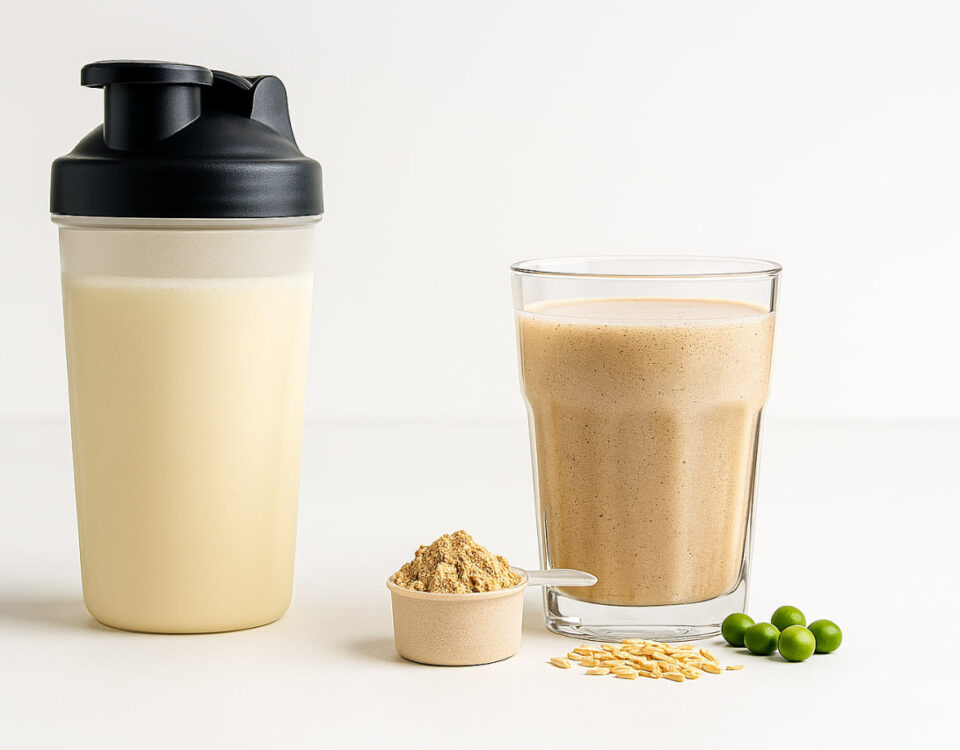
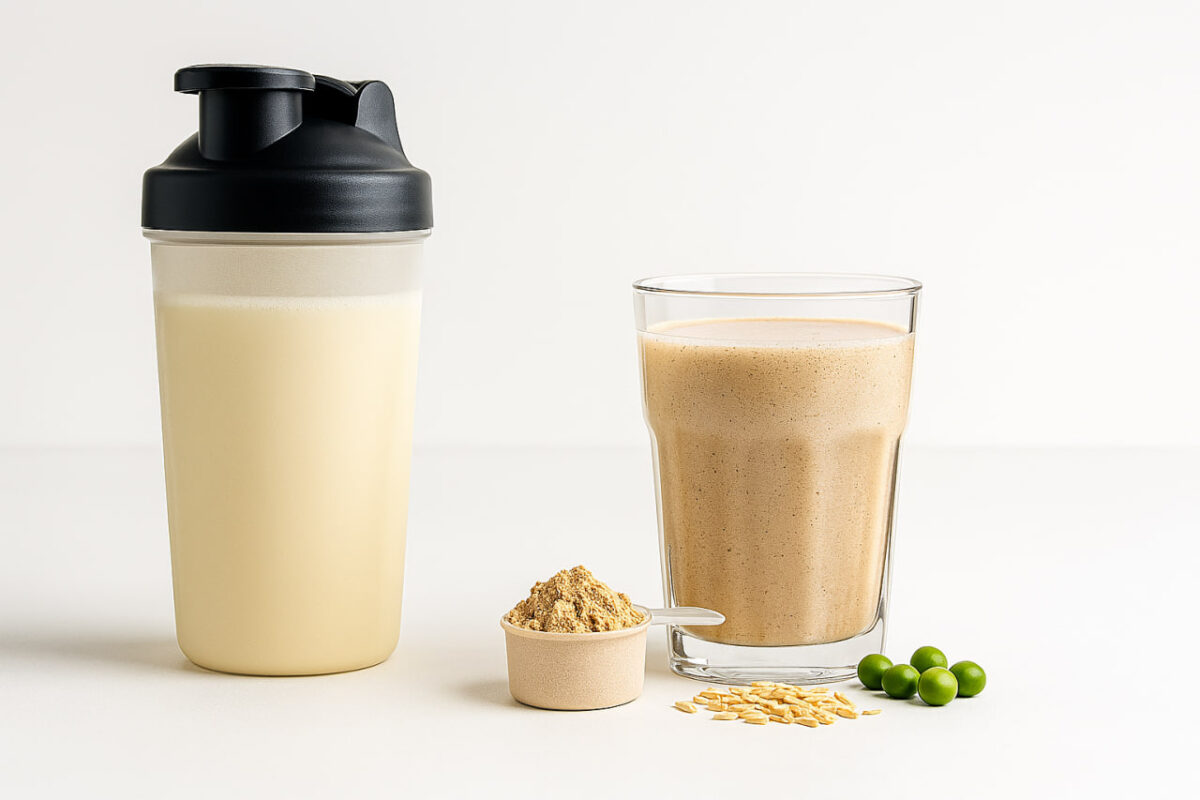
A visual comparison showing how real protein powder mixes smoothly, while fake or low-quality protein often appears clumpy and poorly dissolved.
A Complete Guide to Choosing Safe, Authentic & High-Quality Supplements
Fake protein powders have become one of the most concerning issues in the fitness and supplement world. With the rise of online marketplaces, private-label brands, and unregulated manufacturers, counterfeit supplements are more common than ever — often containing cheap fillers, harmful contaminants, or ingredients that aren’t listed on the label. For anyone who cares about health, muscle growth, or athletic performance, learning how to spot fake or low-quality protein powders is essential.
This guide breaks down how to identify authentic vs. fake protein, the scientific risks, and the exact steps to buy safely every time.
⭐ Key Insight (Must-Read)
Most fake protein powders can be avoided by choosing third-party tested brands, buying from authorized retailers, and checking for quality markers like transparent ingredient lists, batch numbers, and sealed packaging. A real, high-quality protein powder will always come with verifiable certification and consistent quality.
⚠️ Why Fake Protein Powders Are Dangerous
Counterfeit or low-quality protein supplements aren’t just ineffective — they can be harmful. According to analyses from supplement safety researchers, fake powders may contain:
-
Cheap fillers like flour, maltodextrin, or cornstarch
-
Excessive sugar or artificial sweeteners
-
Heavy metals from unsafe manufacturing conditions
-
Unlisted ingredients, including stimulants or banned substances
-
Proteins that do not match the labeled amount (protein spiking)
Fake supplements bypass the strict manufacturing standards applied to reputable brands. That means no quality control, no contaminant testing, and no guarantee of ingredient accuracy.
👇 The Most Common Signs of a Fake Protein Powder
Here are the clearest red flags experts recommend watching for:
1. Suspiciously Low Price 💸
If a protein powder is significantly cheaper than reputable brands, especially whey or plant proteins that usually have stable market prices, it’s likely fake or adulterated.
2. No Third-Party Testing Seal
Trusted protein powders almost always have one of these certifications:
-
NSF Certified
-
Informed-Sport / Informed-Choice
-
USP
-
ConsumerLab
If none of these appear anywhere on the packaging or the website, be cautious.
3. Strange Texture or Mixability
Fake powders may:
-
Clump excessively
-
Smell unusual
-
Taste overly sweet or artificially flavored
-
Separate quickly in water
-
Appear chalky or gritty
Real whey or plant protein has a consistent, smooth texture.
4. No Batch Number or Missing Expiration Date
Authentic supplement brands always print:
-
A batch/lot number
-
Expiration date
-
Manufacturer information
Missing any of these is an immediate red flag.
5. Poor Packaging Quality 📦
Fake products often have:
-
Spelling mistakes
-
Low-resolution printing
-
Blurry labels
-
Cheap plastic tubs
-
Broken or loose seals
Premium manufacturing rarely makes these errors.
6. Unrealistic Claims
If the product promises:
-
“30 lbs muscle gain in 1 month!”
-
“Zero calories, zero sugar, pure muscle only!”
-
“Clinically proven to double testosterone!”
…it’s likely fake or misleading.
🧪 The Science Behind Authentic Protein Quality
Real protein powders undergo strict testing to ensure purity and accuracy. This includes:
• Amino Acid Profiling
Verifies that the protein content matches the label (prevents protein spiking).
• Heavy Metal Screening
Detects contaminants like lead, arsenic, cadmium, and mercury.
• Microbial Safety Checks
Ensures no harmful bacteria or mold is present.
• Sports-Grade Screening
Ensures no banned substances exist — crucial for athletes.
Fake protein powders skip all of these steps, meaning users cannot rely on the safety or effectiveness of the product.
🛒 How to Buy Genuine Protein Powder (Step-By-Step Guide)
✅ 1. Buy Only From Authorized Sellers
The safest places to buy authentic protein include:
-
The brand’s official website
-
Verified sellers on Amazon (Brand Store, “Ships from & sold by”)
-
Large supplement chains (online or in-store)
-
Trusted physical sports nutrition stores
Avoid third-party resellers or unknown discount sites.
✅ 2. Look for Third-Party Certifications
This is the #1 way to ensure authenticity.
If a supplement is NSF or Informed-Sport certified, it has been independently tested for quality, purity, and safety.
✅ 3. Check the Packaging Carefully
Inspect for:
-
Clean, high-quality printing
-
Tamper-proof seal
-
Batch number
-
Expiration date
-
Nutritional panel formatted correctly
Any inconsistencies are warning signs.
✅ 4. Review the Ingredient List
A real protein powder typically has straightforward ingredients like:
-
Whey protein concentrate/isolate
-
Plant protein blends (pea, rice, soy)
-
Natural flavors
-
Enzymes
-
Sweeteners (stevia or sucralose)
Fake powders often include long lists of fillers or generic terms (“protein blend” with no specifics).
✅ 5. Check the Brand’s Website for Transparency
A legitimate brand will display:
-
Third-party certificates
-
Lab results (COA)
-
Clear manufacturing details
-
Contact information
-
Company background
Shady brands avoid transparency.
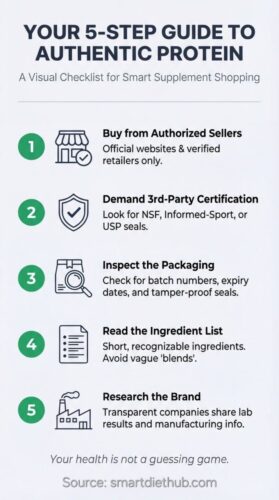
A visual checklist to help you identify and purchase authentic protein supplements, avoiding fake or adulterated products.
🧉 Practical Tests You Can Do at Home
While not 100% scientific, these simple checks help identify suspicious powders:
• The Mix Test
Shake 1 scoop in plain water.
Real whey/plant protein mixes smoothly.
Fake powders clump heavily or leave grainy residue.
• The Foam Test
Excessive foam may indicate fillers or poor-quality ingredients.
• Smell & Color Check
Real protein powders have a mild aroma and consistent color.
Fake powders often smell artificial or look uneven.
📌 Smart Ways to Protect Yourself Long-Term
To always stay safe:
• Stick to well-known brands with years of reputation
Fly-by-night companies appear and disappear quickly.
• Avoid “super cheap deals”
Quality protein has stable pricing.
• Rotate products only within trusted brands
This keeps your supplement routine consistent and safe.
• Don’t buy resealed or repackaged bags
Anything that isn’t factory-sealed is risky.
• Keep receipts and order history
Important for returns or verifying authenticity.
🥤 Sample List of Trusted Protein Categories
(Not brand-specific — these are types of protein known for stability and safety)
-
Whey concentrate (most budget-friendly)
-
Whey isolate (cleaner, low lactose)
-
Casein (slow-digesting, nighttime)
-
Pea + rice blend (best vegan option)
-
Egg white protein (allergy-friendly)
These categories have widespread research, good digestibility, and reliable manufacturing standards.
❓ FAQ — Fake Protein Powder Questions Answered
How common are fake protein powders?
Online marketplaces and unverified sellers increase the risk significantly. Some countries have higher rates of counterfeit supplements than others.
Can fake protein harm you?
Yes. Potential risks include digestive issues, heavy metal exposure, hormonal disruption, or ingesting banned substances.
Is third-party testing really necessary?
If you want guaranteed purity, accuracy, and safety — absolutely.
Is it safe to buy protein on Amazon?
Yes, only if purchased from the brand’s official store or “Ships from and sold by Amazon.com.” Avoid generic third-party sellers.
🏁 Final Takeaway
Avoiding fake protein powders is simple when you follow a few essential rules: buy from trusted sellers, choose third-party tested brands, examine packaging carefully, and never fall for unrealistically low prices. Protecting your health and getting real results depends on using clean, reliable, authentic protein — every time. 💪🔥