





Protein in Vegan Diets: How to Meet Your Needs on a Plant-Based Lifestyle 🌱
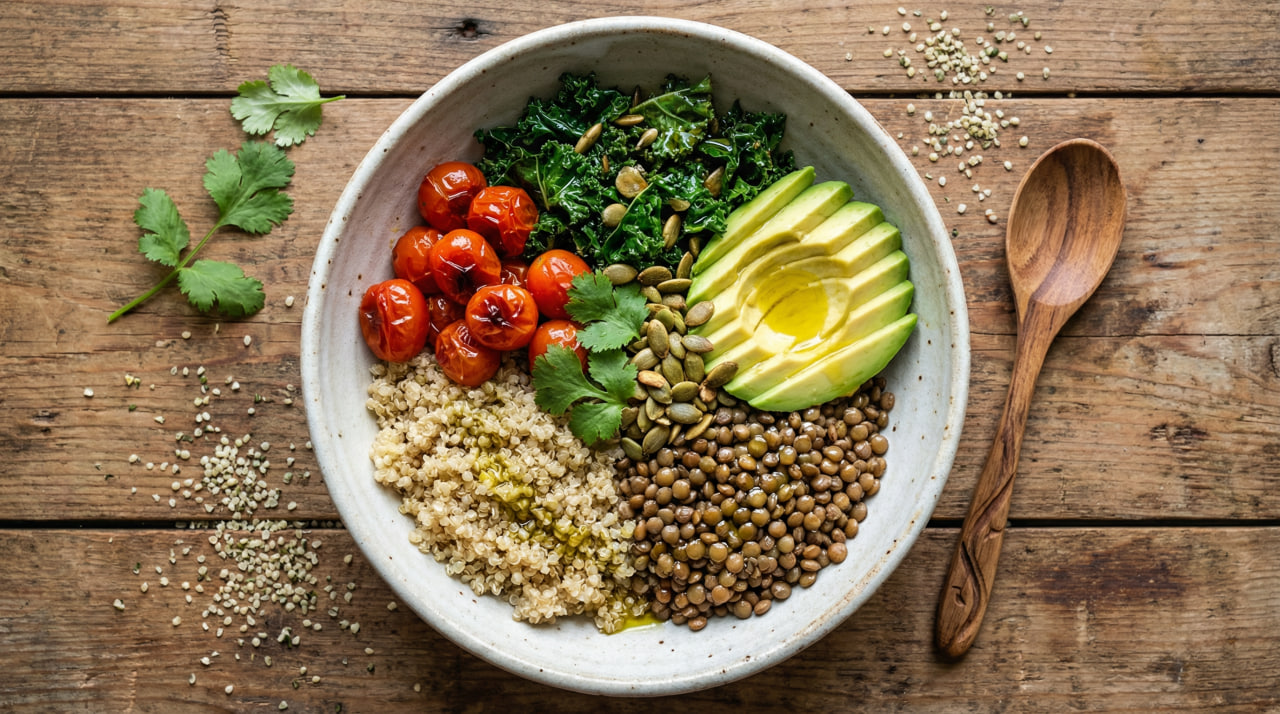
This abundant Buddha bowl combines fluffy quinoa and tender lentils with roasted cherry tomatoes, sautéed kale, creamy avocado slices, pumpkin seeds, and fresh cilantro – delivering 30–35g of complete plant-based protein in one satisfying, colorful meal.
One of the most common concerns about vegan diets is protein—but the problem isn’t lack of protein, it’s lack of planning.
A well-planned vegan diet can absolutely provide enough protein for health, fitness, and even athletic performance. However, protein remains one of the most misunderstood nutrients in plant-based eating.
This article breaks down how protein works in vegan diets, the best whole-food sources, daily requirements, protein quality metrics, preparation methods that improve absorption, special life stages and conditions, common mistakes, and smart strategies—all without relying on supplements.
Why Protein Matters in Vegan Diets 🧠💪
Protein plays a critical role in:
-
Muscle maintenance and repair
-
Hormone and enzyme production
-
Immune system function
-
Satiety and appetite control
The challenge in vegan diets isn’t protein absence—it’s protein planning. Plant proteins are often less concentrated and may have lower digestibility or slightly incomplete amino acid profiles, making variety, combination, and preparation methods essential.
The good news? With the right structure, vegan diets can meet or exceed protein needs at every life stage.
How Much Protein Do Vegans Need? 📊
Protein requirements for vegans are similar to omnivores, but aiming slightly higher accounts for lower digestibility of some plant proteins.
General guidelines (g/kg body weight):
-
Sedentary adults: 0.8–1.0 g/kg
-
Active individuals: 1.2–1.6 g/kg
-
Strength training / athletes: 1.6–2.0 g/kg
-
Older adults (50+): 1.2–1.6 g/kg
-
Pregnancy: 1.1–1.7 g/kg (≈ +25 g/day in 2nd–3rd trimester)
-
Breastfeeding: 1.3–1.9 g/kg (≈ +25 g/day)
Special conditions:
-
Chronic kidney disease (non-dialysis): often 0.6–0.8 g/kg (medical supervision required)
-
Recovery from illness or injury: may increase to 1.6–2.2 g/kg
Understanding Plant Protein Quality 🌾
Protein quality is measured by both digestibility and amino acid composition. Two commonly used scoring systems are:
-
PDCAAS (Protein Digestibility-Corrected Amino Acid Score) – older metric, capped at 1.0
-
DIAAS (Digestible Indispensable Amino Acid Score) – newer, more accurate system that can exceed 1.0
Examples:
-
Soy protein (tofu, tempeh): PDCAAS ≈ 1.0 | DIAAS ≈ 0.9–1.0
-
Quinoa: PDCAAS ≈ 0.8–1.0
-
Lentils (alone): PDCAAS ≈ 0.5–0.6
-
Rice + beans combined: approaches 1.0
Complete or near-complete vegan proteins include:
-
Soy (tofu, tempeh, edamame)
-
Quinoa
-
Buckwheat
-
Hemp seeds
In practice, this means vegans don’t need “perfect proteins” at every meal—they need variety over the day.
Preparation Methods to Boost Absorption 🔪
Simple preparation techniques significantly improve protein and mineral bioavailability:
-
Soaking legumes and grains reduces phytic acid
-
Sprouting increases digestibility and amino acid availability
-
Fermentation (tempeh, miso) improves protein breakdown
-
Proper cooking (boiling, steaming, pressure cooking) enhances digestibility
These methods are inexpensive, accessible, and easy to integrate into everyday cooking.
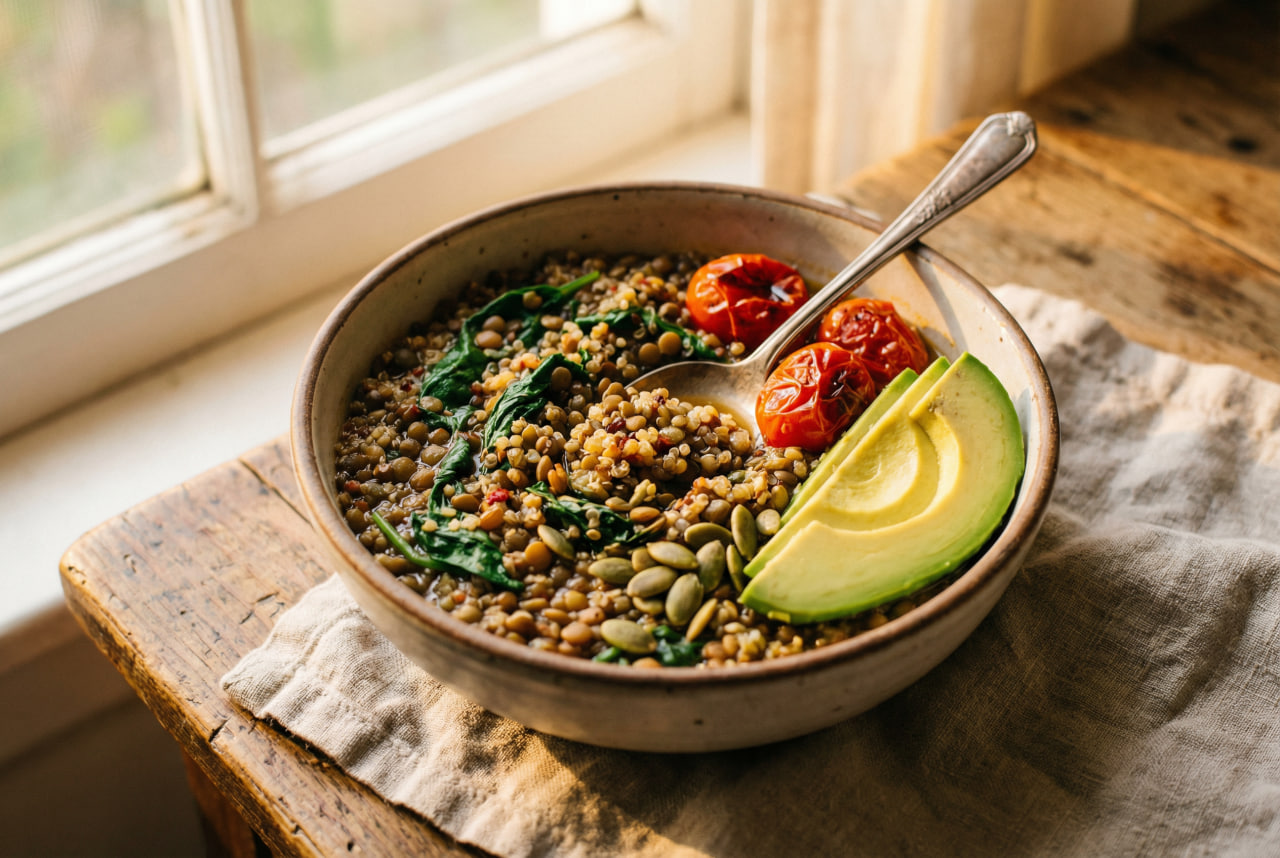
This rustic, overflowing bowl of tender lentils and fluffy quinoa, topped with wilted spinach, roasted cherry tomatoes, chunky avocado slices, and toasted pumpkin seeds, showcases legumes as the affordable, fiber-rich foundation of high-protein vegan eating – delivering 30–35g of satisfying plant-based nutrition.
Best Whole-Food Vegan Protein Sources 🥗
🌱 Legumes (Protein Foundations)
Approximate protein per cooked cup:
-
Lentils: 17–18g
-
Chickpeas: 14–15g
-
Black beans: 15g
-
Split peas: 16g
High in fiber, affordable, and highly satiating.
🌱 Soy-Based Foods
One of the most efficient protein sources in vegan diets.
-
Firm tofu (150g): 20–25g
-
Tempeh (100g): 18–20g
-
Edamame (1 cup): 17g
Soy provides complete amino acids and meaningful amounts of iron and calcium (when fortified).
⚠️ Soy allergy note: alternative legumes and grain combinations are required.
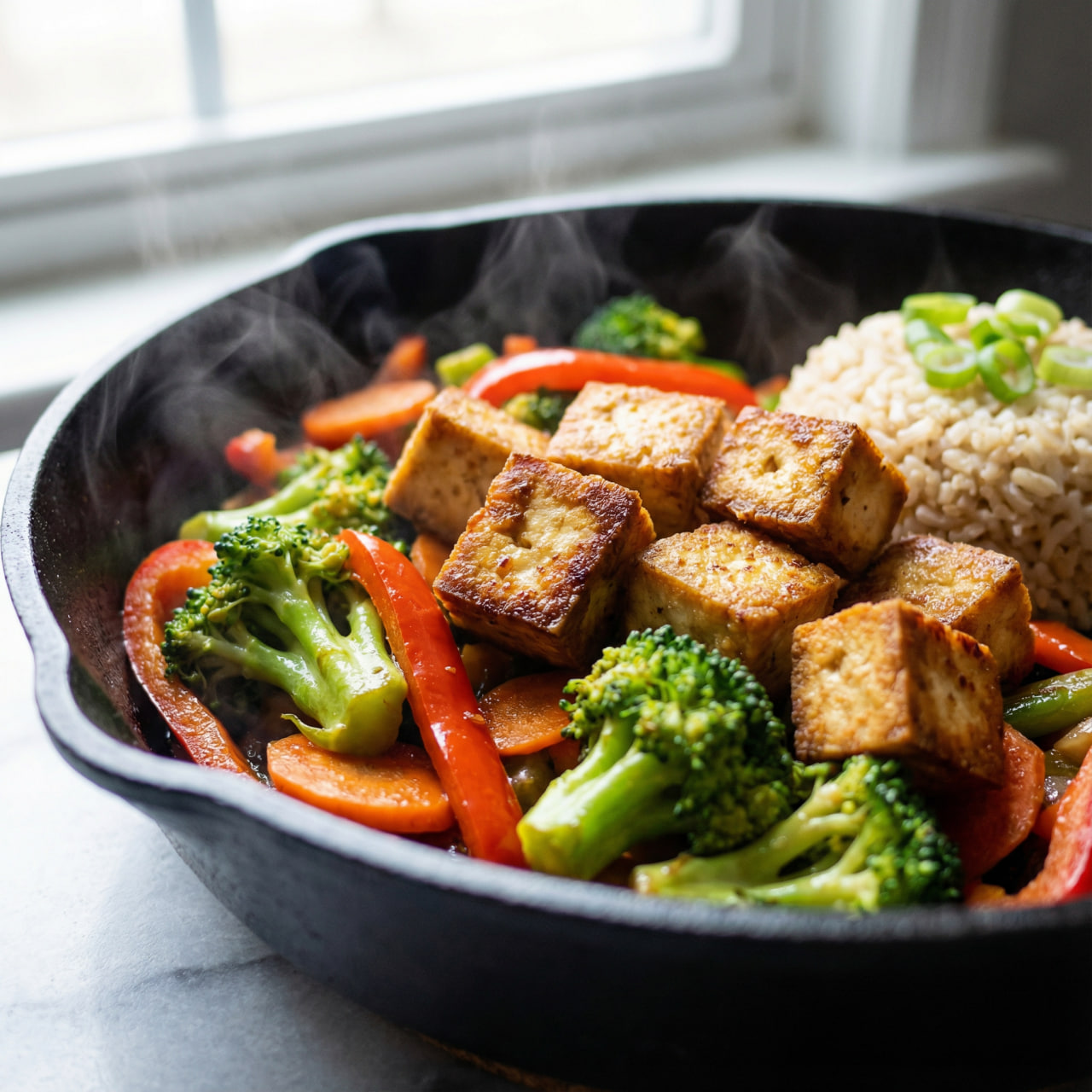
Golden-brown, crispy tofu cubes take center stage in this flavorful stir-fry with broccoli, red bell peppers, carrots, and snap peas, served alongside fluffy brown rice – delivering 30–40g of complete plant-based protein in a delicious, satisfying vegan dish.
🌱 Whole Grains with Protein Density
-
Quinoa (1 cup cooked): 8g
-
Oats (1 cup cooked): 6g
-
Brown rice, barley, farro: 5–7g
Grains meaningfully contribute to protein intake when paired with legumes.
🌱 Nuts & Seeds (Protein Boosters)
-
Peanut butter (2 tbsp): 7–8g
-
Almonds (30g): 6g
-
Chia seeds (3 tbsp): 10g
-
Hemp seeds (3 tbsp): 9–10g
-
Pumpkin seeds (30g): 9–10g
Best used to support meals, not as primary protein sources.
Sample High-Protein Vegan Meals 🍽️
Breakfast
-
Overnight oats with soy milk, chia, hemp, and peanut butter → 25–30g
-
Tofu scramble with vegetables and whole-grain toast → 25–30g
-
Chia pudding with fortified plant milk and pumpkin seeds → 20–25g
-
Whole-grain toast with hummus and avocado → 20–25g
Lunch & Dinner
-
Lentil + quinoa bowl → 30–35g
-
Tempeh stir-fry with brown rice → 30–40g
-
Chickpea curry with farro → 30–35g
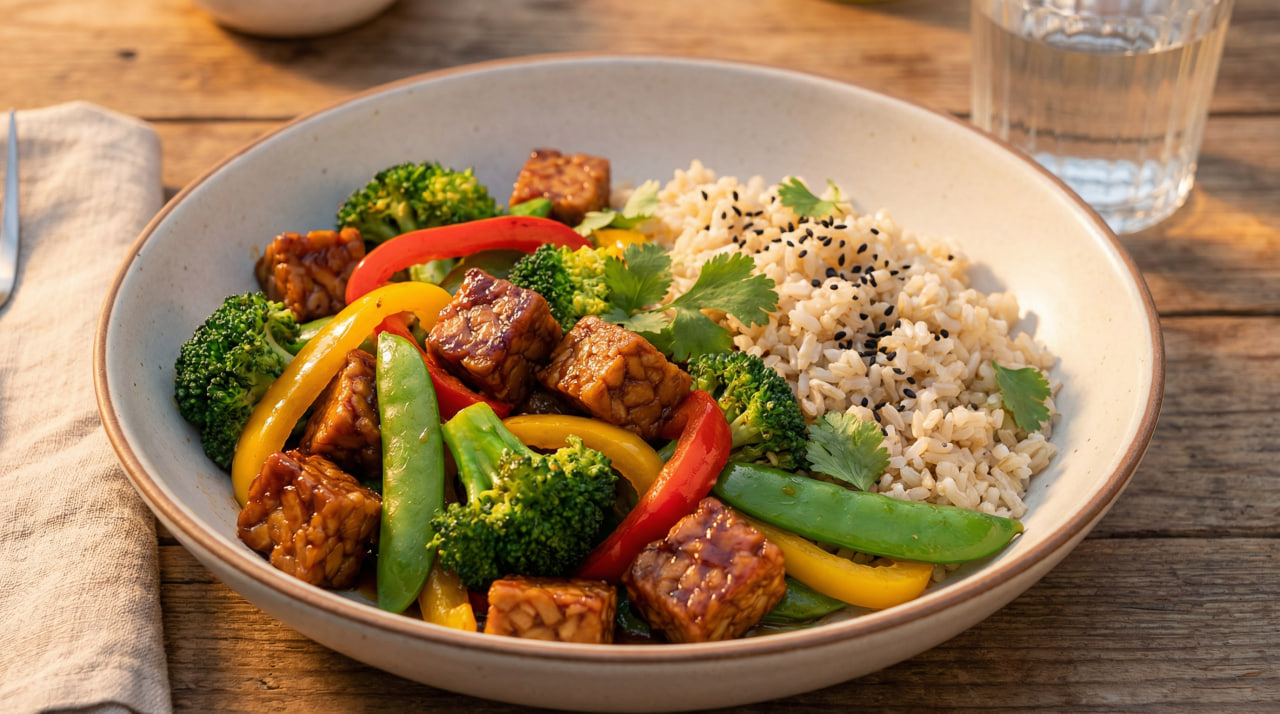
Marinated and golden-brown tempeh cubes shine in this abundant stir-fry with broccoli, bell peppers, snap peas, and carrots, served over fluffy brown rice with black sesame seeds and fresh cilantro – providing 30–40g of complete plant-based protein in one flavorful, filling vegan dinner.
Common Protein Mistakes in Vegan Diets 🚨
-
Relying only on vegetables
-
Avoiding whole grains
-
High fruit intake with low meal structure
-
Insufficient calories (protein adequacy depends on energy intake)
Special Nutrient Considerations 🧩
-
Vitamin B12: required via fortified foods or supplementation
-
Iron: pair plant iron with vitamin C
-
Zinc: soaking and sprouting improve absorption
-
Omega-3s: flax, chia, walnuts; algae-based DHA/EPA if needed
Protein Timing & Distribution ⏰
Even protein distribution supports:
-
Muscle protein synthesis
-
Satiety
-
Stable energy levels
Aim for 20–35g per main meal instead of concentrating intake at dinner.
Are Supplements Necessary? 🤔
Not mandatory. Whole foods can meet protein needs when:
-
Calorie intake is sufficient
-
Meals are structured
-
Legumes, soy, and grains are consumed regularly
-
Preparation methods enhance absorption
Supplements may improve convenience—but they are not required for adequacy.
Final Thoughts: Vegan Protein Is About Strategy, Not Scarcity 🌿
Protein in vegan diets is not a limitation—it’s a design opportunity.
With intentional food choices, adequate calories, smart combinations, and preparation techniques like soaking, sprouting, and fermenting, plant-based eaters can meet or exceed protein needs naturally.
Focus on:
-
Legumes as the foundation
-
Soy for efficiency
-
Grains for balance
-
Seeds and nuts for support
-
Variety for amino acid coverage
If you’re transitioning to a vegan diet, start by improving one meal at a time—not your entire diet overnight.