







Protein-Rich Breakfast Ideas: Smart Ways to Start Your Day Strong 🍳
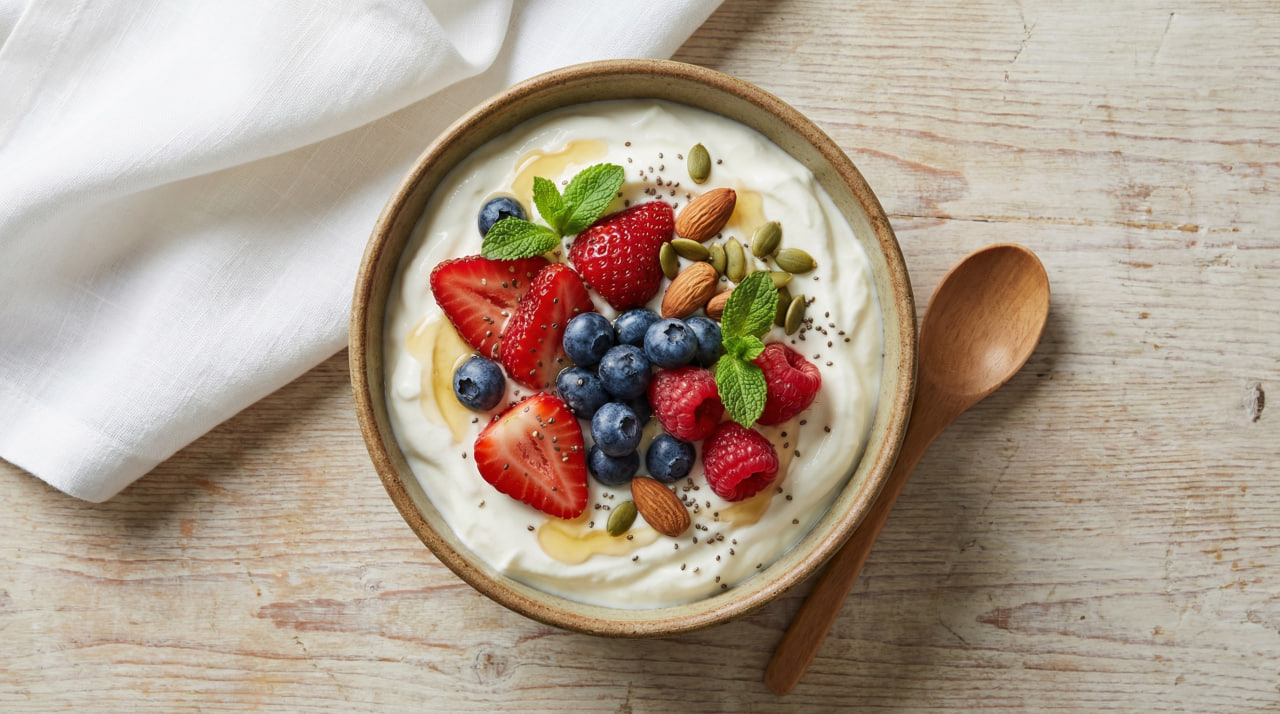
Start your day with this vibrant Greek yogurt bowl packed with 20–30g of protein from yogurt, nuts, and seeds, plus fiber from fresh berries – a quick, satisfying whole-food option that supports energy and focus.
A protein-rich breakfast does more than curb morning hunger. It supports muscle maintenance, stabilizes blood sugar, improves cognitive focus, and helps regulate appetite through the day. Many common breakfasts rely on refined carbohydrates and added sugars, which often lead to early energy dips and mid-morning snacking. This article presents practical, evidence-based high-protein breakfast ideas—all from whole foods, no supplements or brands—plus timing, common pitfalls, budget tips, and a short action plan.
Why protein at breakfast matters 🧠
Higher-protein breakfasts are associated with:
-
Increased satiety, reducing mid-morning calorie intake
-
Better glycemic control, limiting energy crashes
-
Improved muscle protein synthesis when paired with physical activity
-
Enhanced concentration and sustained cognitive performance
A purposeful morning meal sets the metabolic and behavioral tone for the day. The aim is not protein for its own sake, but protein within a balanced meal that includes fiber and healthy fats.
How much protein should breakfast provide? 📊
General practical targets:
-
Minimum for most adults: 20–25 g protein
-
Active individuals / athletes: 25–40 g protein
-
Older adults: 30–40 g protein to counter age-related muscle decline
Distribute protein across meals (every 3–4 hours) rather than front-loading one large serving. Protein spread improves net daily utilization and supports muscle maintenance.
Quick checklist (scan this first) ✅
-
Aim for ≥20 g protein at breakfast
-
Combine protein with fiber and healthy fats
-
Prefer whole foods over processed items
-
Time breakfast within 1–2 hours of waking when practical
High-protein breakfast foundations (no supplements)
Eggs & egg-based breakfasts 🥚
-
Protein: ~6–7 g per large egg.
-
Serving idea: 3-egg vegetable omelet + whole-grain toast → ~25–30 g protein.
Eggs deliver complete amino acids and nutrients like choline; prepare them several ways to maintain variety.

A hearty 3-egg vegetable omelet loaded with spinach, cherry tomatoes, bell peppers, and onions, paired with toasted whole-grain bread – delivering approximately 25–30g of complete protein to kickstart your day with sustained energy and focus.
Dairy-based options 🥛
-
Greek yogurt (170 g): ~15–18 g protein
-
Cottage cheese (½ cup): ~12–14 g protein
Pair with fruit, seeds, or oats for fiber and sustained energy. Use lactose-free dairy if needed.
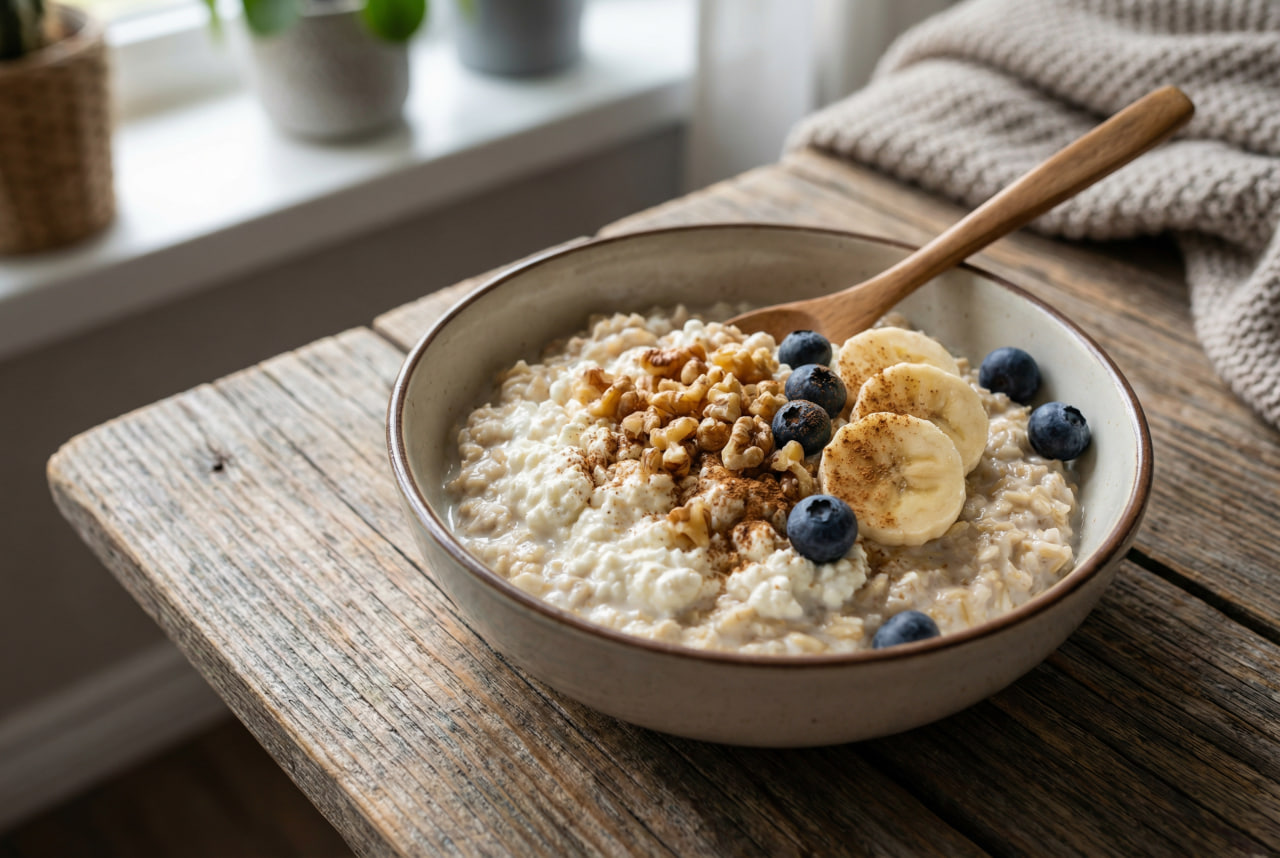
This comforting bowl of oatmeal blended with cottage cheese, sliced bananas, fresh blueberries, chopped walnuts, and a dash of cinnamon offers approximately 20–25g of protein, combining creamy texture with natural sweetness for a balanced, energizing start to your day.
Plant-based breakfasts 🌱
Structured plant meals can meet protein needs when combined thoughtfully:
-
Tofu scramble (150 g tofu): ~20–25 g protein
-
Lentil + grain bowl: lentils (1 cup) + quinoa → 20–30 g protein depending on portions
Tip: combine legumes and grains or use soy-based whole foods (tofu, tempeh, edamame) for complete amino acid profiles.
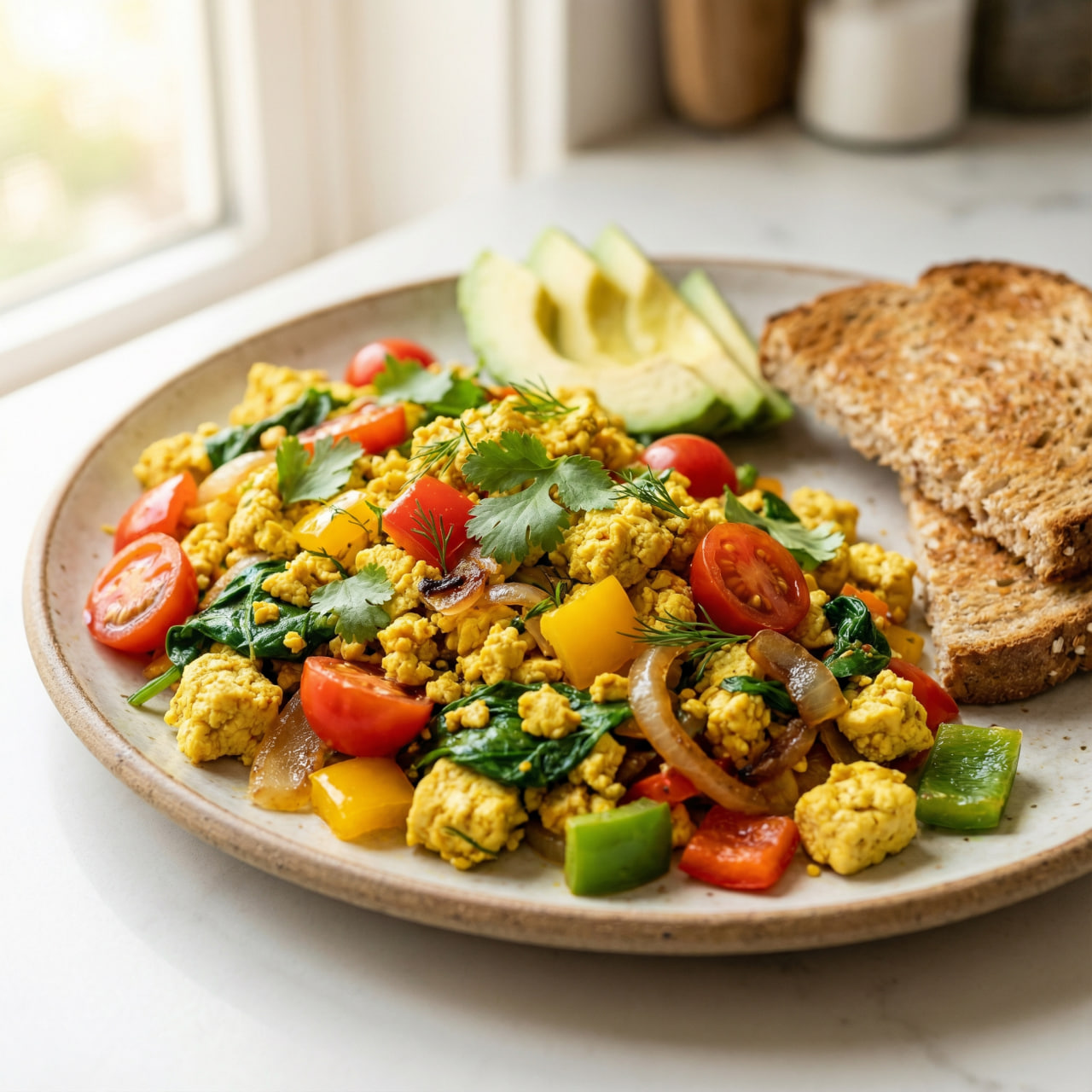
Golden tofu scramble seasoned with turmeric, loaded with fresh spinach, cherry tomatoes, colorful bell peppers, onions, and herbs, accompanied by creamy avocado slices and toasted whole-grain bread – delivering approximately 20–25g of plant-based protein for a satisfying, egg-free morning meal.
Whole grains + protein pairings 🥣
Grains provide energy; pairing them with protein changes the metabolic response:
-
Oatmeal + Greek yogurt or seeds
-
Quinoa porridge + nuts and milk
These combinations add fiber and slow carbohydrate absorption.
Quick, realistic breakfasts for busy mornings ⏱️
-
Greek yogurt + berries + 2 tbsp mixed seeds → ~20–25 g protein
-
Hard-boiled eggs (2–3) + fruit + whole-grain cracker → ~12–21 g protein
-
Leftover lentils + sautéed greens + whole-grain toast → ~20–30 g protein
-
Smooth bowl: cooked oats + cottage cheese + cinnamon → ~20–25 g protein
Prep in advance (batch cook eggs, portion yogurt bowls) to increase adherence.
Protein timing in the morning ⏰
Post-workout window: Consume ~0.3–0.5 g protein per kg body weight within ~2 hours after exercise (e.g., a 70 kg person → 21–35 g).
Before sleep: A slow-digesting protein (casein-like profile from dairy) of ~20–40 g can support overnight muscle maintenance.
Daily distribution: Aim for protein every 3–4 hours with at least ~20 g at main meals.
Timing optimizes utilization but does not replace the importance of total daily intake.
Common breakfast protein mistakes 🚨
-
Skipping protein: Cereal, pastries, and juice-only breakfasts cause rebound hunger.
-
Relying on “protein” labeled foods with added sugar: Check ingredient quality; labels can be misleading.
-
Protein without fiber/fat: Leads to fast digestion and early hunger; always pair macronutrients.
-
Underestimating portion sizes: Small servings may appear high-protein but provide insufficient grams.
Avoid these traps by focusing on whole-food combinations and realistic portions.
Special considerations
Vegetarian & vegan diets
Monitor vitamin B12, iron, zinc, and omega-3s. Use fortified foods and combine legumes + grains. Pair plant meals with vitamin C sources to enhance non-heme iron absorption.
Allergies & intolerances
Common breakfast allergens include eggs, dairy, and soy. Substitute with legumes, seeds, or grain-legume combos, and consult a healthcare professional for severe allergies.
Budget-friendly strategies 💰
Cost-effective protein staples: eggs, lentils, canned beans, oats, frozen vegetables, and dairy or soy products bought in larger formats. Batch-cooking and simple combos (e.g., eggs + oats, lentils + rice) reduce cost per gram of protein and save time.
Sample weekly rotation (keeps variety simple) 🗓️
-
Mon: Veggie omelet + toast
-
Tue: Greek yogurt bowl + seeds
-
Wed: Tofu scramble + greens
-
Thu: Oat-cottage cheese porridge
-
Fri: Lentil + grain bowl
Rotate to cover nutrient variety and sustain adherence.
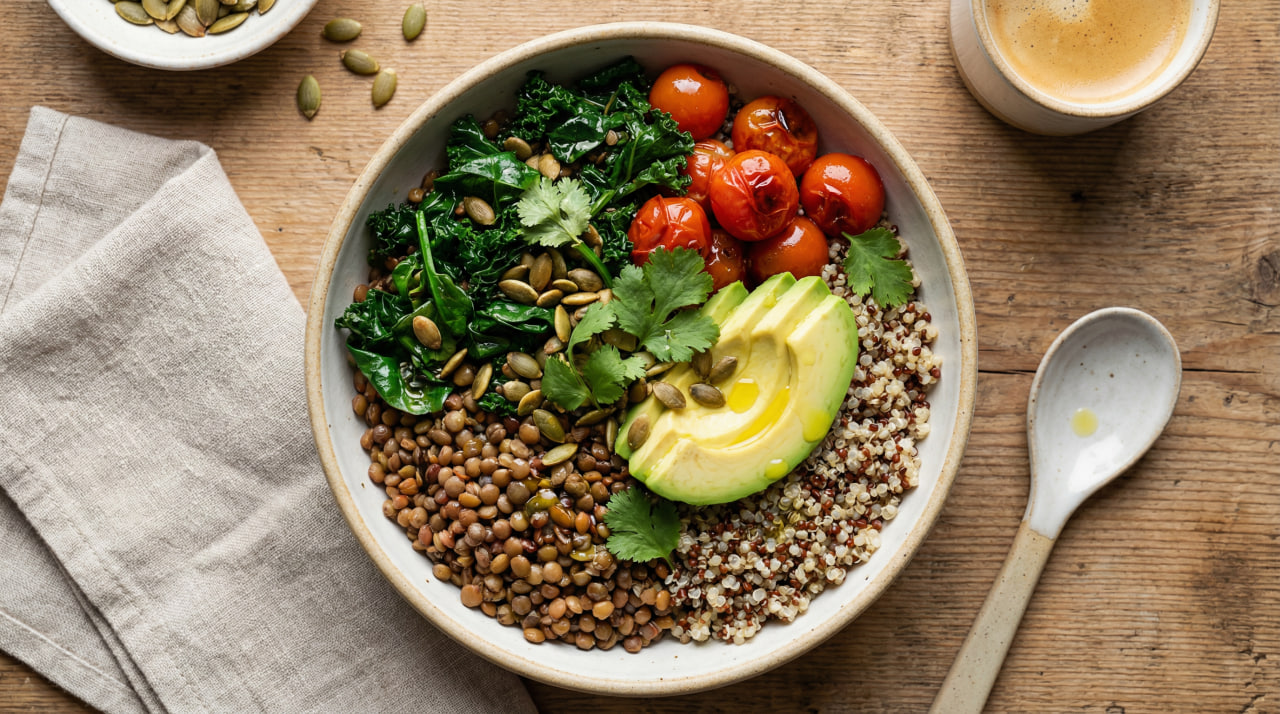
A nutrient-dense bowl combining cooked lentils and fluffy quinoa with sautéed kale, roasted cherry tomatoes, fresh avocado slices, pumpkin seeds, and cilantro – providing 20–30g of complete plant-based protein alongside fiber and healthy fats for lasting energy.
final takeaway & short action plan 🎯
A protein-rich breakfast built from whole foods—balanced with fiber and healthy fats—improves satiety, energy, and metabolic control. Aim for ≥20 g protein at breakfast, prepare simple options ahead, and prioritize combinations over single ingredients.
7-day starter: Pick one protein-rich breakfast from this list, eat it for the next 7 mornings, note hunger and energy changes, then adjust protein portion if needed.